WOMEN OF THE EARTH
What our relationship with the natural world asks of us
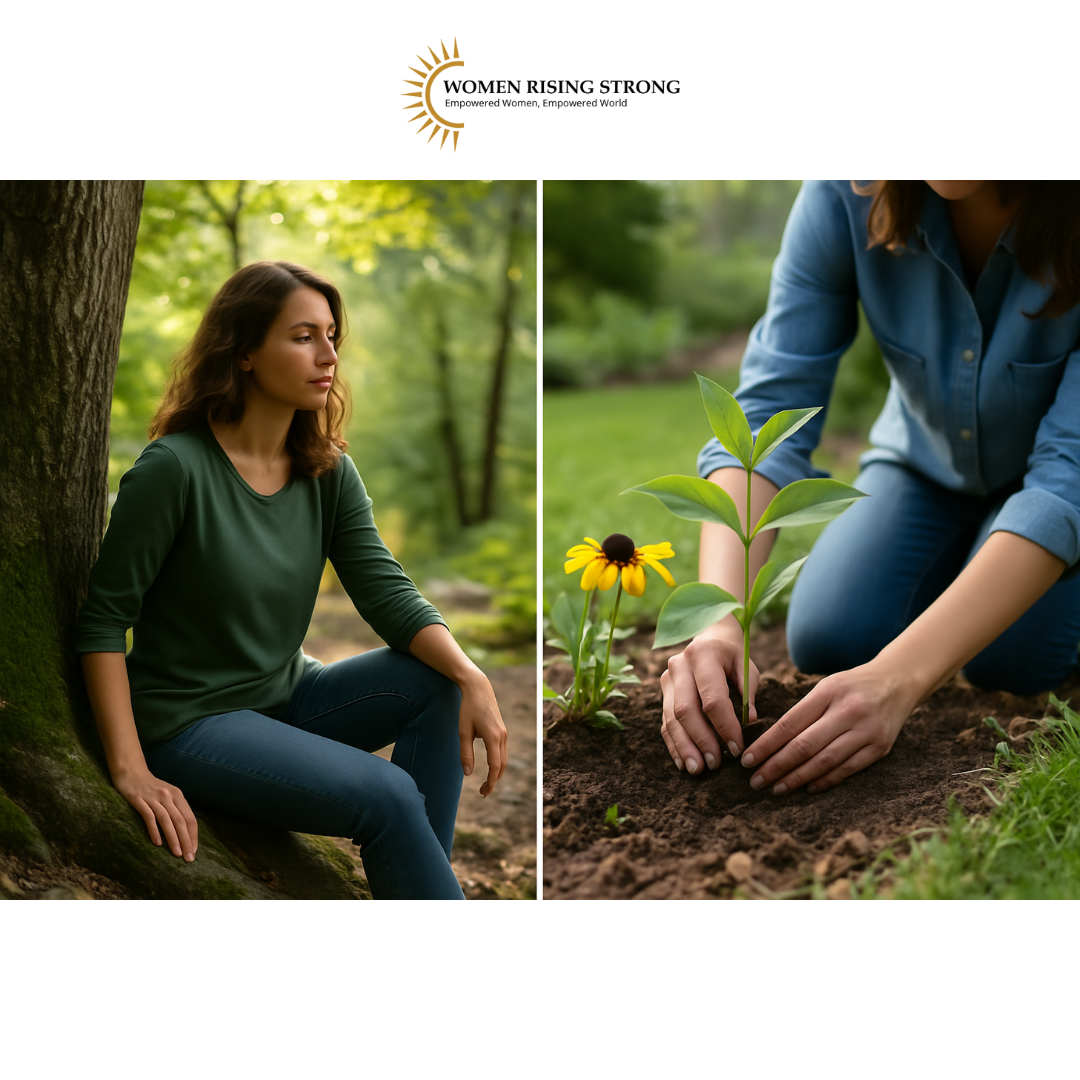
I live in Budoia, a small town at the foot of the Alps in northeastern Italy.
One of the things I love most about living here is that I can leave my house and, before long, be walking among trees, fields and mountains.
I walk a lot.
Sometimes because I want the exercise. Sometimes because I've been sitting at my computer too long. Sometimes because my head is too full and I need to get out of it.
And sometimes simply because it's beautiful outside.
I've noticed that I almost always come home feeling different.
Not transformed.
Just better.
A little quieter. A little less caught up in whatever seemed so important before I left.
Maybe that's one reason I've become more interested in our relationship with the natural world.
Not nature as something picturesque that exists somewhere else—the Amazon, the Arctic, a documentary on television.
The nature we're actually part of.
The water we drink. The food we eat. The air outside our windows. The trees along the road. The mountains I see from my house.
And the choices we make every day without thinking very much about where any of it comes from.
Women and the Environment
Women and nature have been linked symbolically for centuries.
Mother Earth. Mother Nature.
I'm not sure I want to make too much of that connection.
Women aren't naturally more nurturing simply because we're women, and caring for the environment shouldn't become one more responsibility we're expected to carry because we're supposedly better at caring.
But there is a relationship between women and environmental issues that's worth looking at.
In many parts of the world, women are disproportionately affected by environmental change. When water becomes scarce, when crops fail, when families are displaced by extreme weather, existing inequalities can determine who carries more of the burden.
At the same time, women are farmers, scientists, politicians, activists, engineers, Indigenous leaders, business owners and ordinary citizens making decisions about the places where they live.
Some are doing extraordinary work.
Most of us aren't going to negotiate an international climate agreement or save a rainforest.
But all of us consume things.
We buy food and clothes. Heat and cool our homes. Drive cars. Throw things away. Use water. Travel. Vote. Decide what we're willing to pay for and what we're willing to live without.
I don't do all of those things perfectly.
Not even close.
And I'm increasingly wary of environmental advice that turns ordinary life into a moral examination: Did I buy the right thing? Recycle everything correctly? Use too much plastic? Drive when I could have walked?
Guilt isn't a particularly interesting relationship to have with the planet.
Attention might be.
Where does this come from?
Do I need it?
What happens to it when I'm finished with it?
What around me have I stopped noticing?
Those are questions I find more useful.
And sometimes being outside reminds me to ask them.
Four Women, Four Ways of Caring for the Earth
There isn't one way to do environmental work.
One of these women began with plastic bags piling up in her community. Another fought for legal recognition of a river. One has spent decades working inside international institutions. Another has asked the environmental movement to look more carefully at whose voices it includes.
Their work is very different.
That's exactly why I wanted to put them together.
Isatou Ceesay — Starting With What Was in Front of Her
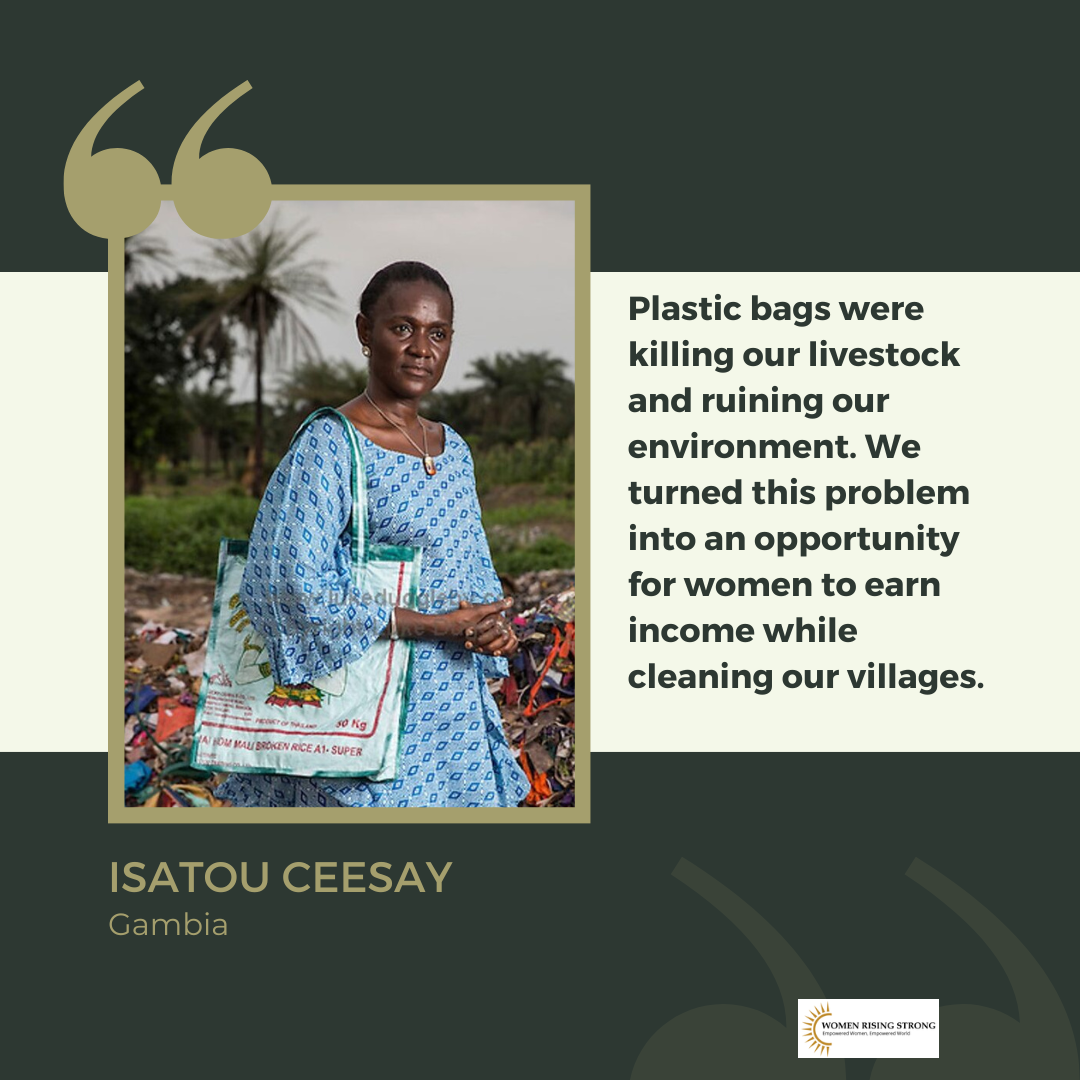
Isatou Ceesay grew up in Gambia, where discarded plastic bags had become a serious problem. They accumulated in streets and fields, polluted the soil and caused problems for livestock.
She started collecting them.
Then she and other women found ways to clean, cut and reuse the plastic, turning it into bags, mats and other products they could sell.
What began as a local response to waste grew into work that also created income for women.
That's what interests me about Isatou's story.
She didn't begin with an enormous question like How do I solve plastic pollution?
She began with the plastic she could see.
There is something wonderfully practical about that.
See Isatou's work
This short video introduces Isatou and some of the women involved in the recycling work she began in Gambia.
Watch Isatou Ceesay's story
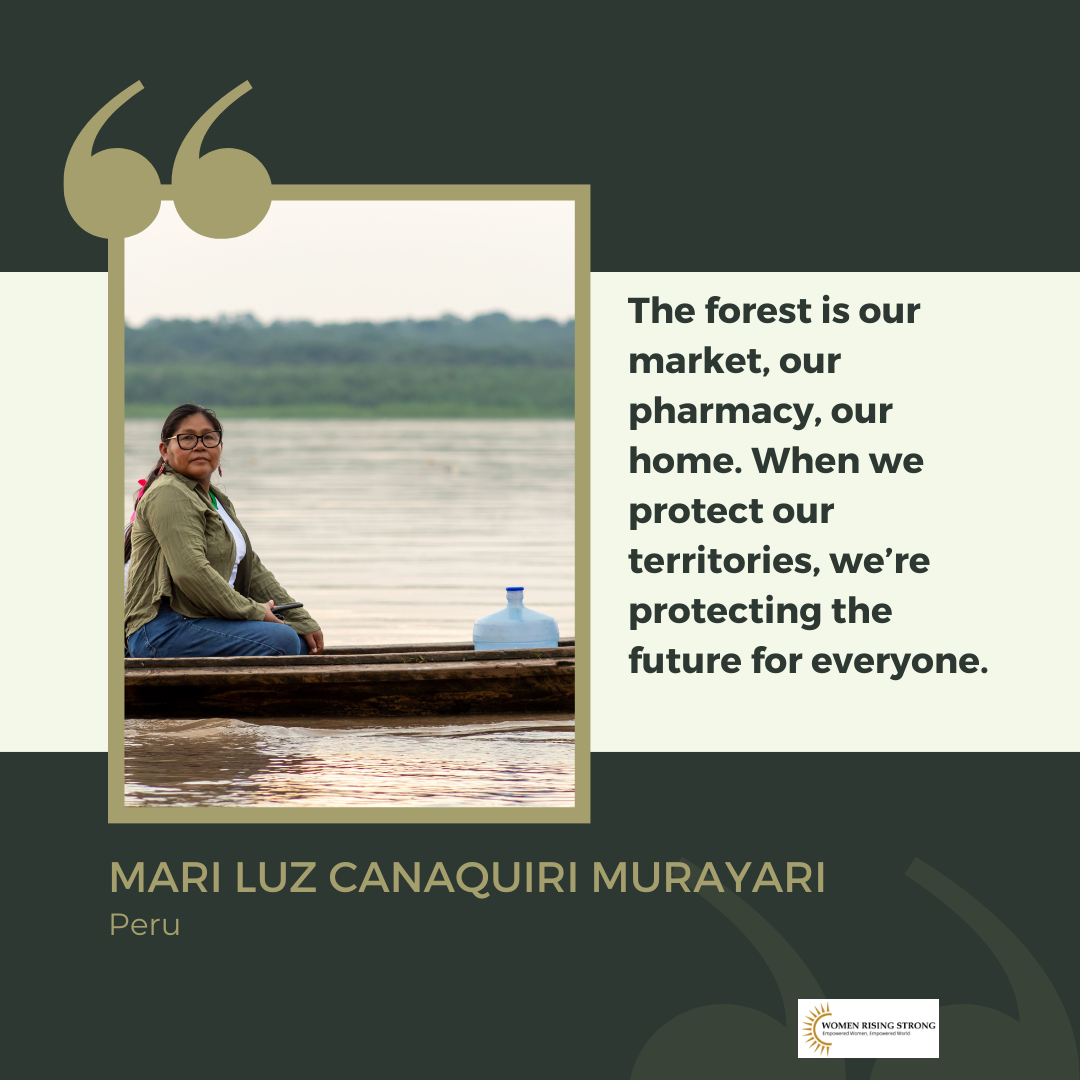
Mari Luz Canaquiri Murayari — When a River Is More Than Water
Mari Luz Canaquiri Murayari is a Kukama Indigenous leader from the Peruvian Amazon.
For her community, the Marañón River isn't simply a natural resource. Their lives, culture and history are connected to it.
Mari Luz has spent years working to protect the river from environmental damage. As president of a federation representing Indigenous communities, she was involved in a remarkable legal fight that resulted in the Marañón being recognized as having rights.
I had to stop when I first encountered that idea.
A river with rights.
We're accustomed to thinking about nature largely in terms of what humans are allowed to take from it, build on it or do with it.
What happens when we turn the question around?
What might the river itself be entitled to?
I don't have a simple answer to that.
But I like that Mari Luz's work made me ask the question.
Hear from Mari Luz
In this short video, Mari Luz talks about the Marañón River, her community and the effort to protect it.
Rachel Kyte — Working From Inside the Room
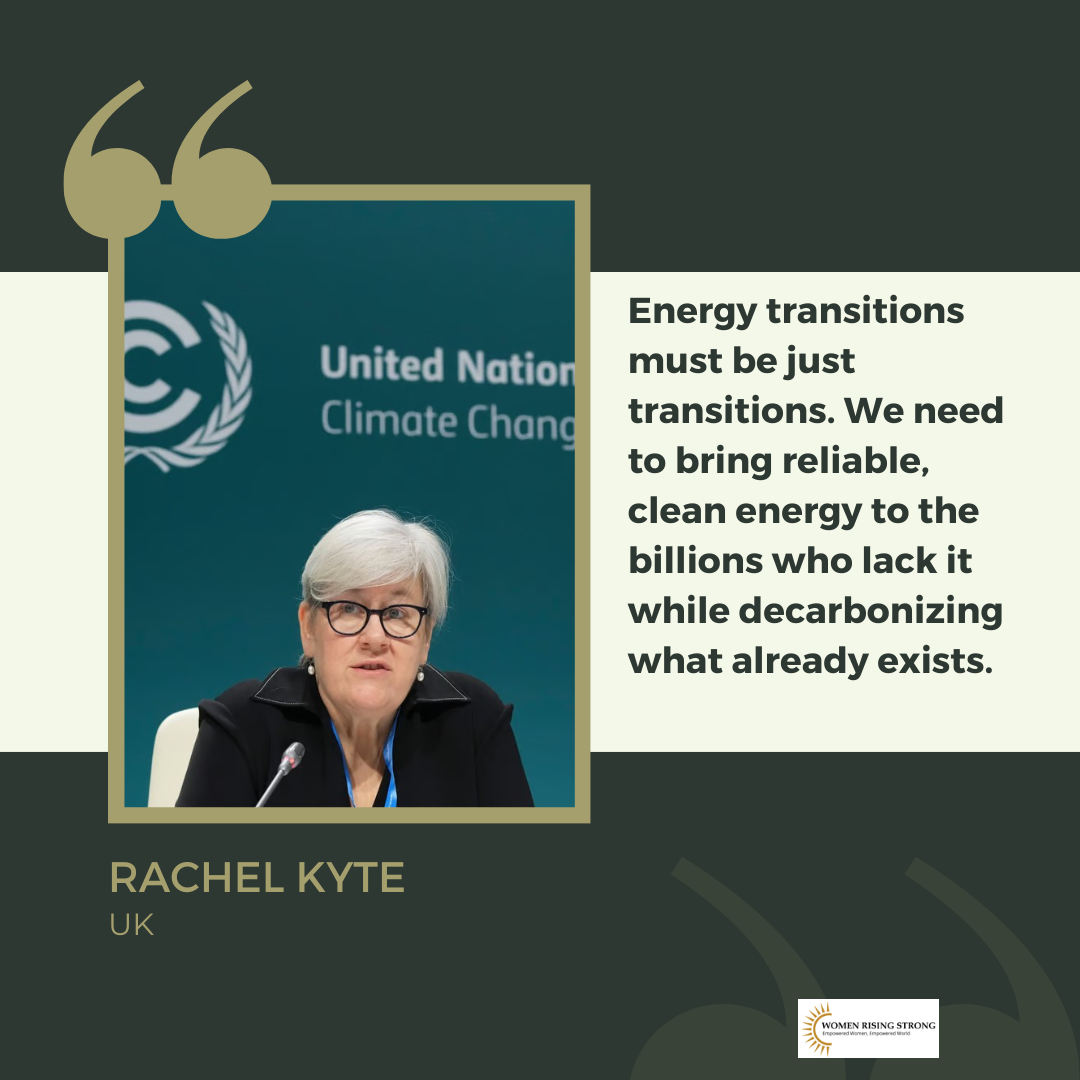
Rachel Kyte has spent much of her career working on climate and energy policy through large international institutions.
It's a very different kind of environmental work from Isatou's or Mari Luz's.
There are negotiations, governments, policies, financing and the enormous practical question of how billions of people can have access to energy without making climate change worse.
I included Rachel because environmental change needs this kind of work too.
Someone has to sit in those rooms.
Someone has to work through the numbers, competing interests and compromises that rarely make for an inspiring photograph.
And progress at that level can be frustratingly slow.
But slow doesn't necessarily mean unimportant.
Listen to Rachel
In this TED Talk, Rachel discusses something most of us probably don't spend much time thinking about: cooling.
As temperatures rise, keeping homes, hospitals, food and medicines cool becomes increasingly important—and requires enormous amounts of energy.
Leah Thomas — Asking Who Gets Included
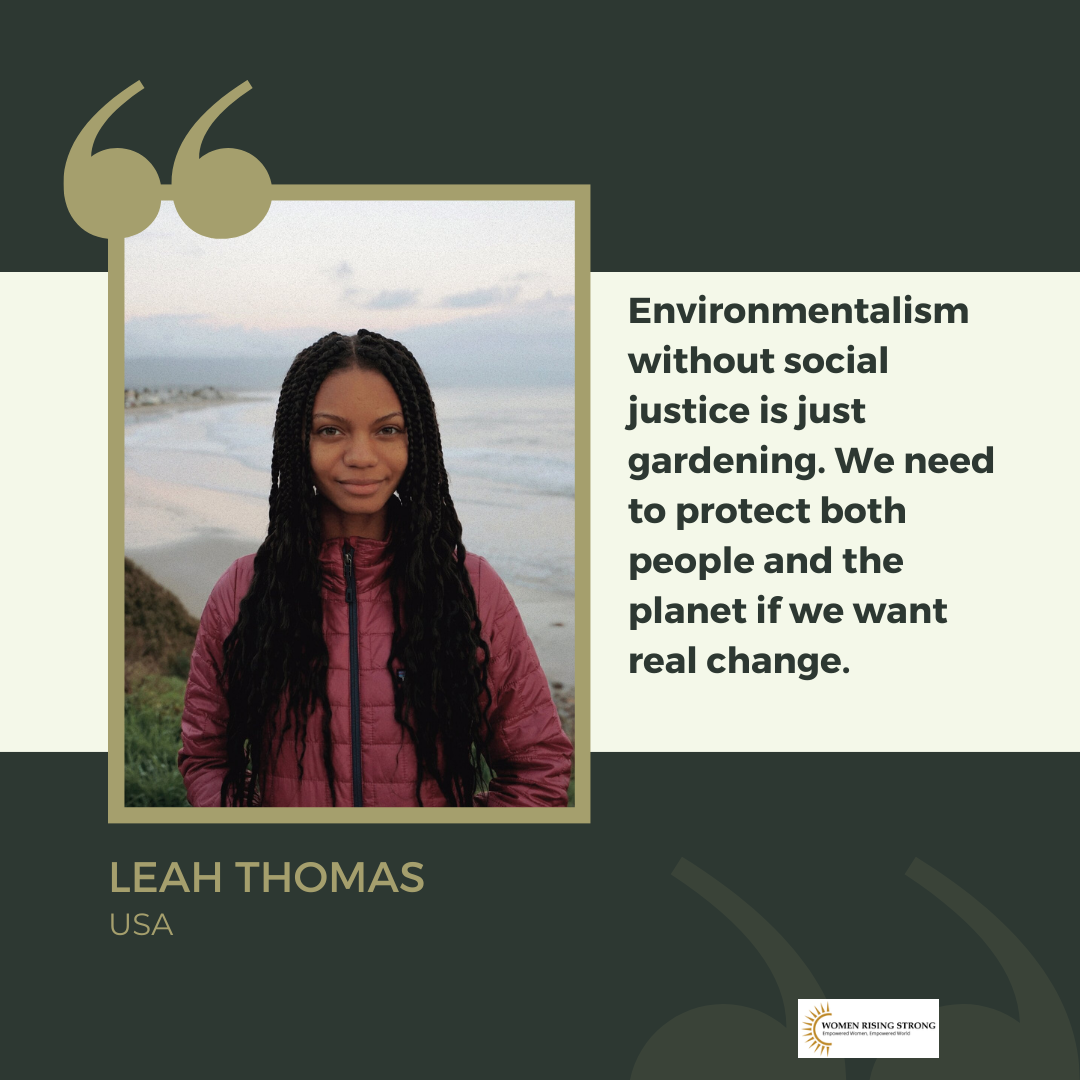
Leah Thomas came to environmentalism from another direction.
While studying and working in sustainability, she became increasingly interested in the connections between environmental problems and social inequality.
Who lives closest to pollution?
Who has access to clean air, water and green spaces?
Whose communities are most affected by environmental decisions?
And whose voices are heard when solutions are discussed?
Leah founded Intersectional Environmentalist to bring some of those questions more directly into environmental conversations.
I like that her work complicates the idea of “saving the planet.”
There isn't one human experience of environmental change.
Where we live, how much money we have, our race, our community and the political power available to us can all affect how environmental problems reach our front door.
Looking after the planet also requires looking at who is carrying the consequences when we don't.
Hear Leah's story
In this short video, Leah talks about her path into environmentalism and why she believes environmental and social issues can't always be separated.
Back Outside
Writing about these women makes me think differently about my own small corner of the world.
I'm not an environmental activist.
I don't want to pretend that remembering my reusable shopping bag or walking instead of driving somehow puts me in the same category as the women I've just written about.
It doesn't.
But I do think paying attention matters.
When I'm walking near my home, I notice things I miss from the car.
Whether the streams are high or low.
Which fields have been cut.
The first changes in the trees.
The rubbish someone has left beside a trail.
How much hotter a familiar walk feels than I remember it feeling years ago.
None of that makes me an expert.
It simply makes the place where I live less abstract to me.
And perhaps that's a reasonable place to begin.
Not with a list of everything we should be doing.
With noticing what's actually around us.
A Question to Carry With You
What have you noticed about the natural world where you live?
Not what you think you should care about.
What do you actually notice?
Maybe it's a tree you pass every day.
A river.
The birds outside your window.
A garden.
The heat.
The lack of rain.
Something that has changed.
Something that hasn't.
I think I'd start there.
Beginning Again Without Starting Over

What we carry with us when life changes
I've started again quite a few times.
For many years, being married to a military man meant moving whenever the next assignment came.
A new country. A new house. New people. New systems to understand. Sometimes a new language.
There were parts of that life I loved. There were also times when I felt completely out of place.
And every move meant figuring out work again.
I've taught languages. I've worked in import-export offices. I've served food in a school cafeteria. I've taken jobs because they were available, not because they represented some carefully planned career path.
For a long time, I think I saw those changes as interruptions.
Now I'm not so sure.
Something usually came with me.
Languages did.
I kept studying them. Eventually I learned seven. I taught them wherever life allowed me to teach, and I kept language coaching alongside other work.
That thread remained even when almost everything around it changed.
Then, after my mother died, something else began.
I started writing.
I was fifty.
I didn't have a lifelong plan to become an author at fifty. There wasn't a moment when I announced that I was reinventing myself.
I simply began writing.
Then I wrote more.
Women Rising Strong grew from that. Books followed. And gradually writing became an important part of my life.
But I don't think I became a completely new person.
The woman writing now is carrying all the others with her.
The language teacher is here.
The woman who lived in different countries is here.
The military wife who learned how to arrive somewhere unfamiliar and make a life is here.
The daughter who came home to her mother is here.
Even the woman serving lunch in a school cafeteria is somewhere in here.
Nothing started from zero.
And maybe that's what I've misunderstood about beginning again.
We don't start from the beginning.
We start from wherever we are, with everything we've already lived.
Maybe Reinvention Is the Wrong Word
We use the word reinvention a lot, especially when we talk about women in midlife.
I've used it myself.
But lately I've been wondering whether I actually like it.
It sounds as though we're supposed to invent an entirely new woman and leave the previous one behind.
I don't want to do that.
There are plenty of things about myself I've changed. There are others I'm still trying to understand. But there are also parts of me that have survived every move, every job, every age and every version of my life.
Curiosity is one of them.
Languages are another.
And now, I think, writing.
Perhaps change isn't always about becoming someone else.
Sometimes it's about discovering what has been there all along and finding a different way to use it.
Sometimes something genuinely new appears.
And sometimes life changes without asking us first, and we have to work out who we are inside circumstances we didn't choose.
That's very different from the cheerful version of “starting over.”
Not every beginning is exciting.
Some are frightening.
Some happen because we've lost someone or something.
Some are practical decisions.
Some don't work.
And some things we try simply because we're curious to see what happens.
I think all of those possibilities belong in the conversation.
About Being “Too Old”
Age does change things.
I don't want to pretend otherwise.
Starting something at fifty isn't the same as starting it at twenty.
We may have less time ahead of us.
But we also know more.
We know what boredom feels like. What work we're good at. What we're terrible at. Which compromises we can live with and which ones cost too much.
We may have financial responsibilities that make change harder.
We may also have skills, relationships and experience that make some kinds of change easier.
Our bodies change too.
So do our priorities.
None of that adds up neatly to better or worse.
It simply means we're beginning from a different place.
When I started writing at fifty, I didn't have the advantages of beginning at twenty-five.
But twenty-five-year-old me couldn't have written Basta, Àle.
She hadn't lived it yet.
That's not an argument for waiting.
I wish I had started some things earlier.
It's simply an acknowledgment that when we begin affects what we bring to the beginning.
And I find that much more interesting than telling ourselves age doesn't matter.
It does.
It just doesn't get to decide everything.
Three Women, Three Different Beginnings
Vera Wang, Julia Child and Anna Mary Robertson Moses didn't follow the same path.
One moved from skating to fashion journalism to design. One discovered cooking after moving to another country. One began painting when arthritis made another kind of creative work difficult.
I don't see them as examples of women who “started late.”
I see three women who arrived at something new carrying everything that had come before.
That's more interesting to me.
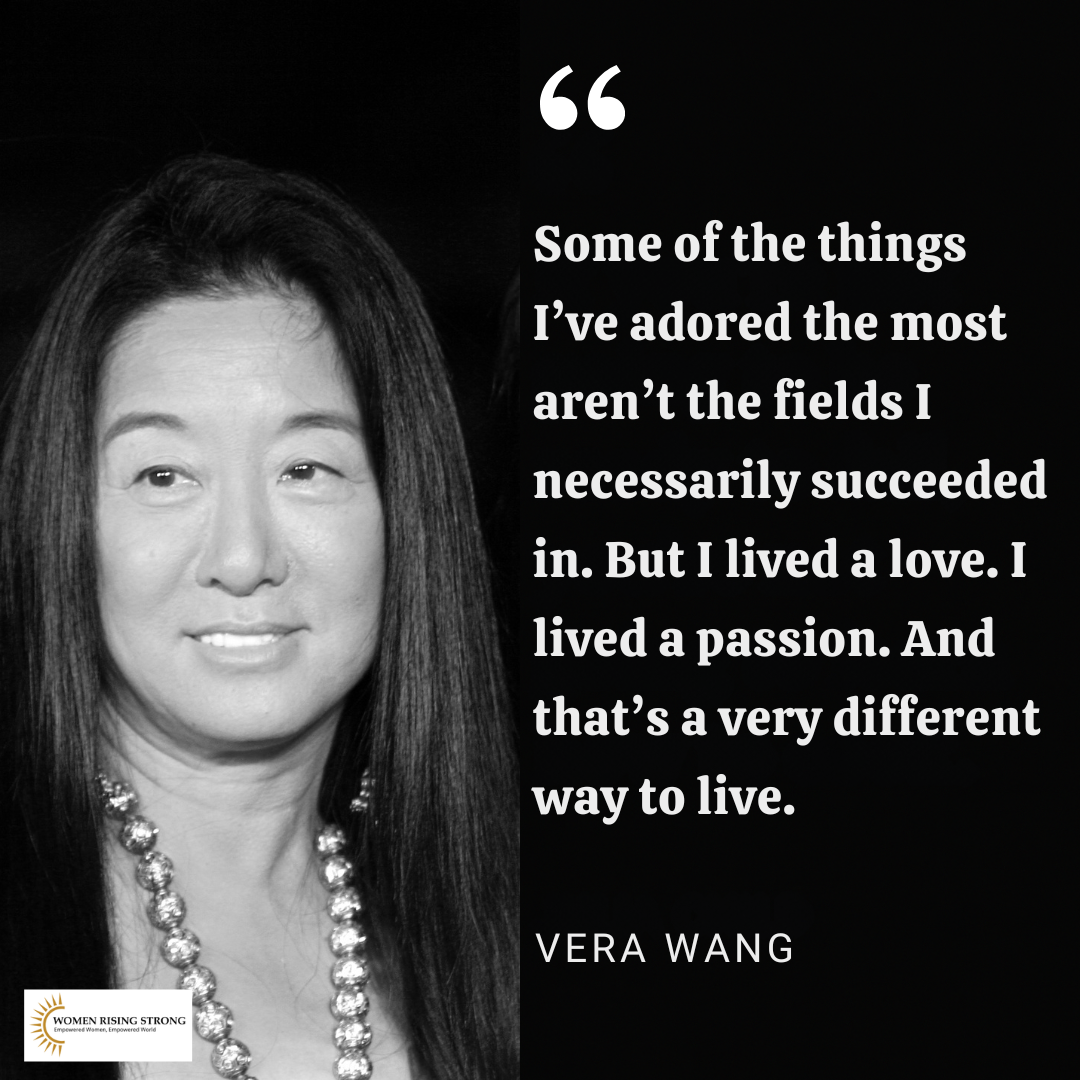
Vera Wang — One Thing Led to Another
Before Vera Wang became a designer, she was a competitive figure skater.
When skating didn't take her where she had hoped, she moved into fashion, working for Vogue and later Ralph Lauren.
Then came another change.
While planning her wedding, Wang became frustrated by the bridal dresses available to her. She eventually had a gown made to her own design and, at forty, opened her first bridal boutique in New York.
Looking backward, it's tempting to arrange all of this into a perfect sequence:
skating → fashion → bridal design → Vera Wang.
But lives only look that orderly afterward.
At each stage, something didn't work out, something changed, or another possibility appeared.
And she took things with her.
The discipline and understanding of movement from skating. Years spent looking closely at clothes at Vogue. Experience at Ralph Lauren. Her own frustration as a bride.
By the time she started designing wedding dresses, she wasn't really starting from nothing at forty.
She was starting with forty years behind her.
That's a very different thing.
Hear from Vera
In this BBC interview, Vera Wang talks about skating, fashion, failure, work and the unexpected route that eventually led her to design.
Watch Vera Wang's interview with BBC News
Julia Child — Finding Something She Didn't Know She Was Looking For
Julia Child didn't grow up dreaming of becoming a chef.
Cooking wasn't even particularly important to her when she was young.
Then she moved to France with her husband, Paul.
There she became fascinated by French food—not simply eating it, but understanding how it worked. She studied at Le Cordon Bleu, practiced obsessively and eventually began collaborating on the book that became Mastering the Art of French Cooking.
The book was published when Julia was in her late forties. Television followed.

What I love about her story isn't that she became successful later in life.
It's that she didn't know beforehand that this was going to matter to her.
I find that strangely reassuring.
We're often encouraged to search inside ourselves for the dream we've supposedly always had.
What if there isn't one?
What if we encounter something at thirty-six, forty-eight or sixty-three and think:
Oh. I really like this.
Then we follow it for a while and see where it goes.
Sometimes a beginning is no more complicated than that.
Watch Julia
In this short clip, Julia talks about making mistakes while learning to cook—something she did plenty of herself.
Watch Julia Child on learning through mistakes
Grandma Moses — When One Thing Became Another
Anna Mary Robertson Moses spent most of her life farming, raising a family and making things with her hands.
She embroidered.
Then arthritis made embroidery increasingly difficult.
So she painted instead.
I think that's my favorite part of her story.
Not that she became the famous Grandma Moses later in life. Not the exhibitions or the attention that eventually followed.
The small practical decision that came first:
I can't do this comfortably anymore. What else could I do?

Painting allowed her to continue making pictures when needlework no longer did.
She painted scenes she knew—farms, landscapes, people working, winters, celebrations, ordinary rural life remembered from years before.
Eventually other people noticed.
But she had begun before they were looking.
There is something here that feels especially relevant as we get older.
Our circumstances change. Our bodies change. Things that were once possible may become difficult or impossible.
That doesn't always mean abandoning the thing we loved about them.
Sometimes we can ask:
Is there another way?
For Anna Mary Robertson Moses, there was.
It happened to involve a paintbrush.
Meet Grandma Moses
This CBS Sunday Morning feature looks back at her life, her paintings and the unlikely career that began in her later years.
Watch the Grandma Moses feature
What Came Before Still Counts
I wouldn't finish these stories by saying that Vera, Julia and Grandma Moses prove we're never too old.
They don't prove anything about what will happen in our lives.
Most people who begin painting at seventy-six won't become internationally known artists.
Most people who discover cooking in their thirties won't become Julia Child.
And that's perfectly all right.
Success isn't what makes beginning worthwhile.
That's something I'm understanding more clearly myself.
We can learn French without becoming fluent.
Take piano lessons without performing for anyone.
Write something nobody publishes.
Grow terrible tomatoes for three summers before finally growing decent ones.
Try something and discover we don't actually like it.
A beginning doesn't have to justify itself by becoming an achievement.
Sometimes curiosity is enough.
And when something does grow into an important new part of our lives, we haven't arrived there empty-handed.
Vera brought fashion with her.
Julia brought curiosity, appetite and the experience of living somewhere new.
Grandma Moses brought decades of rural life and years of making things with her hands.
I brought languages, teaching, moving, motherhood, loss, and fifty years of being myself to writing.
We bring our lives with us.
The Stories We Tell
What happens when women tell their own lives

Years ago, when I was living in England, I got caught in the rain in Bury St Edmunds.
I went into a bookshop to get out of it.
That's where I found Wild by Cheryl Strayed.
I hadn't gone looking for the book. I don't remember knowing very much about it. But I bought it, took it home and spent much of that weekend reading.
I loved it.
Not because I suddenly wanted to hike more than a thousand miles along the Pacific Crest Trail.
I didn't.
What stayed with me was how honestly Strayed wrote about herself.
She wasn't particularly interested in making herself look good.
There was grief, sex, bad decisions, anger, love, loneliness, selfishness, endurance. She allowed contradictory things to exist beside each other without tidying them up for the reader.
I think that was what affected me.
At the time, I wasn't yet writing books of my own. I certainly wasn't imagining that years later I would write a memoir.
But something about Wild stayed with me.
Maybe it was the realization that a woman's life didn't have to be extraordinary to be worth examining.
And that telling the truth about yourself doesn't mean presenting a final, polished version of who you are.
You can write from inside the confusion too.
I understand that much better now than I did then.
Why Other Women's Stories Matter to Me
I've read biographies of extraordinary women.
I've read memoirs by women whose lives look nothing like mine.
I've read novels in which a fictional woman has made me recognize something about myself more clearly than any self-help book ever could.
That's one of the strange things stories can do.
We enter someone else's life for a while and sometimes notice our own from a different angle.
Not every book changes us.
Most don't.
And I'm not sure I believe anymore that books hand us maps or tell us where to go.
The best ones I've read have often done almost the opposite.
They've complicated things.
They've made me question an assumption.
They've shown me a life I hadn't considered.
They've made someone I thought I understood seem less simple.
Or they've put words around something I'd felt but hadn't known how to describe.
Sometimes that's enough.
Who Gets to Tell the Story?
Women have always told stories.
But having something to say and having the opportunity to publish it haven't always been the same thing.
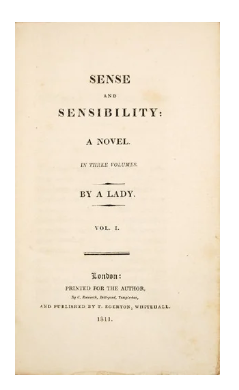
Jane Austen's Sense and Sensibility appeared in 1811 with its author identified simply as:
“By a Lady.”
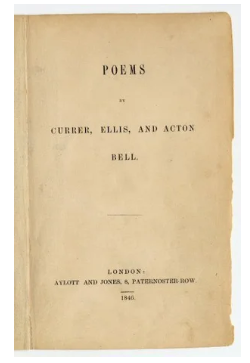
The Brontë sisters initially published as Currer, Ellis and Acton Bell.
Charlotte Brontë later explained that they had chosen names that didn't obviously identify them as women because they suspected female authors were likely to be treated with prejudice.
That detail still gets me.
Imagine writing Jane Eyre and wondering whether the world would take it more seriously if it didn't know you were a woman.
Of course, women's relationship with publishing is much more complicated than two famous examples, and women certainly aren't struggling to get books published today in exactly the way they were in the nineteenth century.
But questions about whose stories are considered important haven't disappeared.
Which lives become literature?
Which experiences are dismissed as trivial?
Whose domestic life is considered worthy of serious attention?
Whose anger makes readers uncomfortable?
Who gets described as universal—and who gets put into a category?
I find those questions fascinating.
Especially now that I'm writing my own stories.
Telling Our Own Stories
Today there are more ways to put words into the world.
A book.
A blog.
A newsletter.
A podcast.
A social media post.
A notebook nobody else will ever read.
I don't think everyone needs to “find her voice.”
And I certainly don't think every private experience needs to become public.
Some things belong to us.
But I do think there is value in asking ourselves:
What story am I telling about my own life?
Because we tell stories even when we aren't writers.
I was always the responsible one.
I'm terrible with money.
I'm the one everybody depends on.
I missed my chance.
My childhood was happy.
I don't need anyone.
I'm too old to change.
Sometimes those stories are true.
Sometimes they're partly true.
Sometimes we've repeated them for so long that we've stopped examining them.
Writing my memoir made me encounter that in ways I didn't expect.
Memory is complicated.
Two people can remember the same event differently.
We interpret the past from wherever we're standing now.
And when we write about our own lives, we're making choices constantly: what to include, what to leave out, where the story begins, what we think something meant.
So telling our story isn't the same thing as producing the truth.
It's looking carefully at what happened and asking:
What do I understand about it now?
For me, that's where storytelling becomes interesting.
Not because telling a difficult story automatically heals us.
Not because every story needs to inspire someone.
And not because being vulnerable in public is inherently brave.
Sometimes a story is simply worth telling because this happened, this is how I remember it, and this is what I'm still trying to understand.
That's enough.
Two Women Who Refuse the Simple Version
Some writers make me think differently not because they give me answers, but because they make the story more complicated.
Chimamanda Ngozi Adichie and Isabel Allende do that in very different ways.
They write from different countries, generations and traditions. But both have spent much of their work asking what happens when history is told through individual lives—and what gets lost when we reduce people to one version of who they are.
Chimamanda Ngozi Adichie — More Than One Story
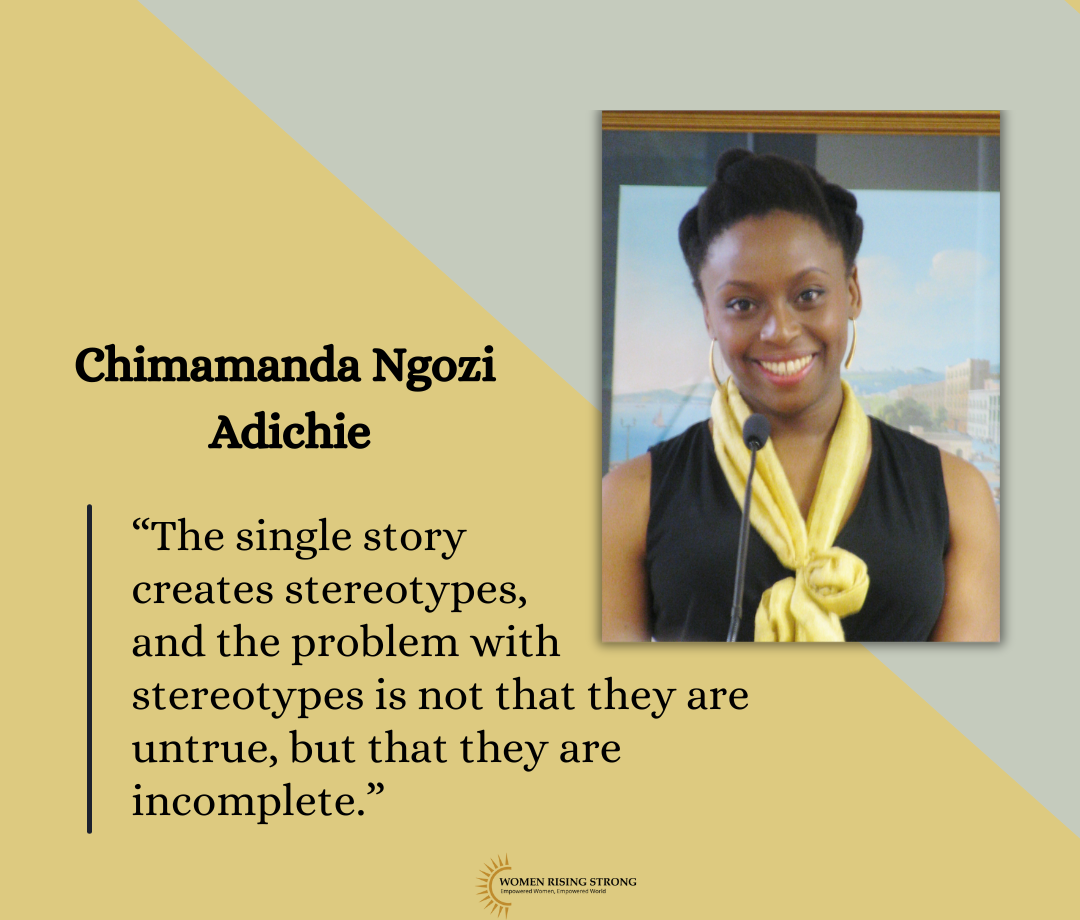
In her 2009 TED Talk The Danger of a Single Story, Chimamanda Ngozi Adichie tells a wonderful story about herself as a child in Nigeria.
She began writing very young. Her characters were white and blue-eyed. They played in the snow. They ate apples.
None of this resembled the world around her.
Those were simply the books she had been reading, and she had absorbed an idea without realizing it:
This is what stories look like.
Later, discovering African writers changed what she understood literature could contain.
Her own world could be in books too.
I return to that idea often.
Because a “single story” isn't necessarily a lie. That's what makes it interesting.
It may contain truth.
The problem comes when one truth becomes the entire truth about another person, country, culture—or even ourselves.
Adichie's novels resist that simplification.
In Half of a Yellow Sun, history becomes personal through people living through the Nigerian Civil War. In Americanah, migration, race, love, belonging and returning home become tangled together in ways that don't resolve into a simple message.
Her characters are allowed to contradict themselves.
So are real people.
Perhaps that's one reason her work stays with me.
Listen to Chimamanda
If you haven't watched The Danger of a Single Story, I think it's worth the time.
Not only because of what it says about literature.
It might also make you wonder about some of the single stories you've accepted about other people—or about yourself.
Watch: The Danger of a Single Story
Isabel Allende — Beginning With a Letter
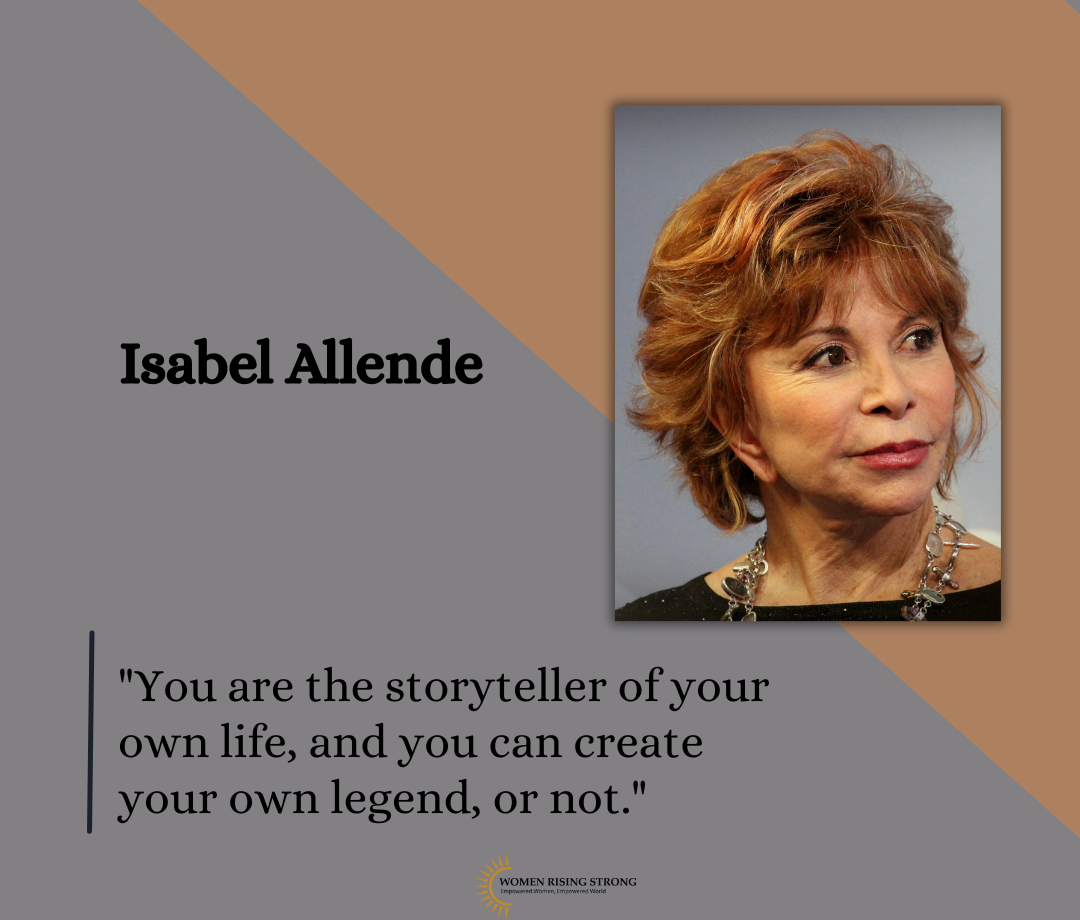
In 1981, Isabel Allende began writing a letter to her grandfather, who was dying in Chile.
She was living in Venezuela, having left Chile after the military coup.
The letter grew.
Eventually, it became The House of the Spirits.
I love that beginning.
Not because it fits neatly into a story about destiny or becoming a writer.
Because it began with something so ordinary and human:
she wanted to write to someone she loved.
From that came a novel about a family, memory, politics, violence, love and generations of women living through history.
Allende has continued writing across decades, often returning to some of those same territories: family, displacement, memory, women, loss, desire and survival.
There's also a ritual of hers that fascinates me.
She has long said that she begins her books on January 8, the date she began that letter to her grandfather.
I don't know whether rituals make us better writers.
But as someone who writes now, I understand the appeal of having a date when you stop thinking about beginning and simply sit down and begin.
What I admire most about Allende's work, though, is the way private lives and larger history exist together.
History isn't something happening somewhere in the background.
It enters kitchens and bedrooms.
It changes marriages.
It separates families.
It crosses borders with us.
And years later, someone sits down and tries to understand what happened.
That's storytelling too.
Rupi Kaur — Finding Readers Another Way
Rupi Kaur's route into publishing was very different.
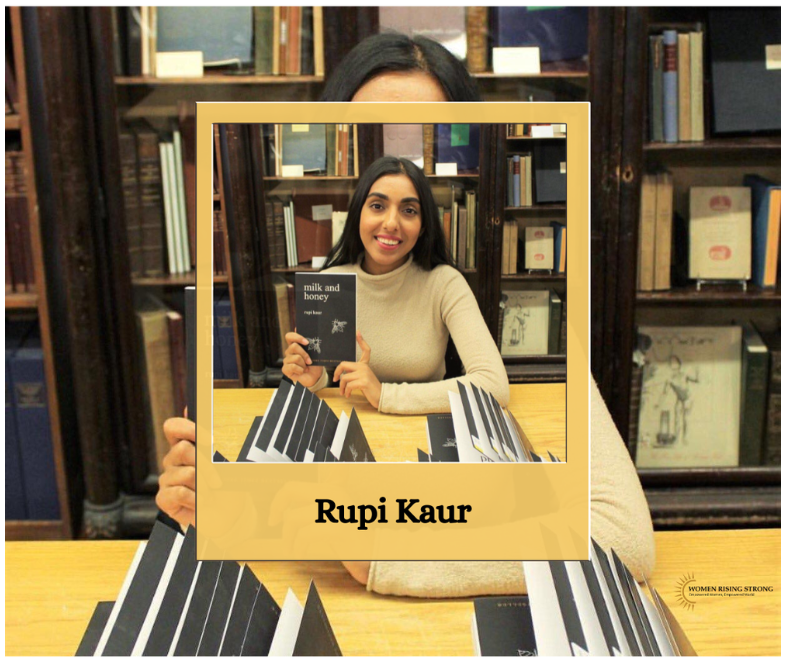
She shared short poems and drawings online and self-published milk and honey in 2014.
Readers found it.
Lots of them.
The book eventually became an enormous commercial success and was traditionally republished.
Her poetry has also been criticized—sometimes sharply. Its simplicity, its style, its relationship with social media and even the question of what constitutes poetry have all generated debate.
I actually think that's part of why she belongs here.
Not every woman who changes storytelling has to be universally admired.
Kaur found readers outside the traditional route and wrote in a form that was immediately recognizable as hers.
Some people saw themselves in it.
Others didn't see much in it at all.
Both can be true.
What interests me is what her career says about the relationship between writer, publisher and reader.
For most of literary history, getting your words in front of a large audience required someone else to open the door.
That's no longer entirely true.
The internet has created plenty of problems for writers.
But it has also made something possible that Jane Austen and the Brontës couldn't have imagined:
a writer can put her work directly in front of readers and let them decide whether they want more.
That doesn't guarantee good writing.
It doesn't guarantee success.
But it changes who gets to begin the conversation.
The Books We Carry With Us
I couldn't give you a complete list of every book that has affected me.
And I'm not sure I could always explain why one book stayed while another, perhaps technically better book, disappeared from my memory.
Sometimes it's the book.
Sometimes it's who we were when we read it.
I found Wild because it was raining in Bury St Edmunds.
Had it been sunny, perhaps I would have walked straight past that bookshop.
I like thinking about that.
A completely ordinary decision can put a particular book into our hands at a particular moment in our lives.
Years later, we may still remember where we were when we first read it.
Not because it transformed us overnight.
Because something in it stayed.
A Question to Carry With You
Is there a book that changed the way you understood something about your own life?
Not necessarily your favorite book.
Not the best book you've ever read.
Just one that arrived at the right—or perhaps simply an interesting—moment.
What did it help you see differently?
Mine is still Wild.
I didn't hike the Pacific Crest Trail.
I didn't change my life that Monday.
I just kept thinking about that woman who was willing to put the messier parts of herself on the page.
Years later, when I began putting some of mine there too, perhaps a little of that stayed with me.
Learning to Do Nothing
Why rest can be harder than it sounds
Not long ago, I found myself sitting with a cup of tea, looking out the window.
I wasn't reading.
I wasn't answering messages.
I wasn't writing.
I wasn't even listening to anything.
I was just sitting there.
And after a few minutes, I noticed something slightly ridiculous.
I felt as though I should be doing something.
There was nothing urgent waiting for me. Nobody needed an immediate answer. I wasn't late for anything.
Still, part of my brain was already making suggestions.
You could answer that email.
You could finish that paragraph.
You could put a load of laundry on.
You could at least read something.
Apparently, sitting with a cup of tea wasn't quite enough.
I find that interesting.
Because I like rest. I certainly like the idea of it.
But actually stopping?
I'm not always very good at that.
Why Is Rest So Difficult?
I don't think I'm unusual.
Many of us have become accustomed to filling almost every available space.
If we're waiting somewhere, we reach for the phone.
If we're watching television, we answer a message at the same time.
If we have a free afternoon, we think of everything we could finally get done.
And for women, there can be another layer.
Being useful is often rewarded.
Remembering what everyone needs. Organizing things. Helping. Anticipating. Getting things done before anyone has to ask.
It can become such a familiar way of moving through life that stopping feels strangely uncomfortable.
I've noticed this in myself.
Sometimes when I sit down, I don't immediately relax.
First, I negotiate with myself.
I've done enough today.
I'll work on that tomorrow.
It's okay to sit here.
Why should drinking tea require an internal permission slip?
I don't have a grand answer.
But I'm beginning to pay attention to the question.
Rest Doesn't Have to Be Productive
This is something else I've caught myself doing.
I justify rest by explaining what it will help me accomplish later.
I'll think more clearly.
I'll write better.
I'll have more energy.
I'll be more productive tomorrow.
All of those things may sometimes be true.
But I've started wondering whether even that misses the point.
What if I rest and nothing useful comes from it?
What if the cup of tea doesn't produce a breakthrough?
What if the walk doesn't give me an idea for something I'm writing?
What if I lie on the sofa for half an hour and emerge as exactly the same person who lay down?
Surely that's allowed too.
Rest doesn't always need to be converted into something productive to justify the time it occupies.
Sometimes we're tired.
Sometimes we've had enough stimulation.
Sometimes we want to sit in the garden.
Sometimes we want to close our eyes.
Sometimes we don't want to talk to anybody for twenty minutes.
That seems reason enough.
Two Very Different Conversations About Rest
Arianna Huffington and Tricia Hersey have both written extensively about rest.
But they come to it from very different places.
Huffington's argument grew partly from her experience of exhaustion in a highly demanding professional life and became closely connected with sleep, workplace culture and sustainable performance.
Hersey's argument is much more political and historical. Her work through The Nap Ministry places rest in the context of capitalism, white supremacy, slavery and the exploitation of Black bodies.
I don't want to flatten those two ideas into one comfortable message about “self-care.”
They're not the same.
But putting them beside each other raises an interesting question:
Why do we feel the need to justify rest at all?
Arianna Huffington — When Exhaustion Stopped Looking Like Success
In 2007, Arianna Huffington collapsed from exhaustion and sleep deprivation, fell and injured herself.
The experience forced her to reconsider a way of working that had treated exhaustion almost as evidence of commitment.
She eventually wrote The Sleep Revolution and founded Thrive Global, focusing much of her work on sleep, wellbeing and workplace culture.
There's a practical argument behind much of what she says:
Exhausted people don't necessarily work better.
They make mistakes. Their judgment suffers. Their health can suffer. More hours don't automatically produce better work.
That makes sense.
But there's something about the argument that I still want to push a little further.
What if rest didn't make us better workers?
Would we still deserve it?
I think we would.
And perhaps that's where the conversation becomes more interesting than productivity.
Hear from Arianna
In this interview, Huffington talks about her collapse from exhaustion and how it changed the way she thought about success, sleep and work.
Tricia Hersey — Rest as Something Much Bigger
Tricia Hersey comes at rest from a very different direction.
She's an artist, theologian and founder of The Nap Ministry, and I recently read her book Rest Is Resistance.
It challenged me.
Not because it taught me how to take better naps.
Because Hersey isn't really talking about naps in the ordinary wellness sense.
Her argument is rooted in the history of slavery, racism, capitalism and what happens when human bodies are valued primarily for what they can produce.
For Hersey, rest is political.
That's a much bigger claim than we're all too busy and should slow down.
And I don't think I have to agree with every part of her argument to find the question underneath it worth considering:
How much of my value have I attached to what I produce?
That's uncomfortable.
I write books.
I coach.
I run a website.
I make things.
I help people.
I like accomplishing things.
There's nothing inherently wrong with any of that.
The question is what happens when I'm not doing those things.
Am I still comfortable with myself when I'm not useful to anyone?
When nothing is being finished?
When there is nothing to show for the hour I just spent?
I'm still thinking about that.
And perhaps that's one of the best things a book can do.
No Seven-Day Challenge
After everything we've just said, I don't want to give you seven tasks for becoming better at resting.
That would be a little absurd.
So there is no challenge.
No checklist.
No requirement to meditate for twenty minutes, take a bath, turn off your phone or spend an afternoon doing absolutely nothing.
You know your own life.
Maybe you don't need more rest.
Maybe you need more stimulation, more people, more work that interests you.
Or maybe you are tired and haven't quite admitted how tired.
I don't know.
But the next time you find yourself doing nothing, notice what happens.
Can you stay there?
Or does your mind immediately begin looking for something useful to do?
Mine often does.
I'm trying not to obey it every time.
A Question to Carry With You
When you stop doing, do you feel at ease—or do you feel you should be doing something?
And if it's the second one:
Where do you think that “should” came from?