Small Shifts, Real Change

Sometimes growth begins with noticing what's taking up too much space
There are times when I look at everything I'm doing and wonder how so many small things ended up becoming my responsibility.
Not the big things. Those are usually obvious.
It's the remembering.
The organising.
The appointments, messages, shopping lists, things that need replacing, people who need calling, plans that need making.
None of them seems particularly difficult on its own.
Together, they can become surprisingly heavy.
For years, my instinct was simply to become better at managing it all. Better lists. Better routines. Better organisation.
I'm not sure that's always the answer anymore.
Sometimes the better question is:
Does all of this need to be done in the first place?
And, perhaps even more importantly:
Does all of it need to be done by me?
Lightening the Mental Load
Mental load is difficult to explain because so much of it is invisible.
It's not only doing something. It's remembering that it needs doing.
It's noticing that you're running out of something before anyone else notices.
It's thinking three steps ahead.
It's being the person who knows where things are, what time everyone needs to leave, what still needs to be bought and what can't be forgotten.
And sometimes we become so accustomed to carrying all of this that we stop noticing we're carrying it.
I created Lightening Your Mental Load: A Practical Guide to help with exactly that.
Not to make you more productive.
Not to help you squeeze more into your day.
Quite the opposite.
It's a chance to look at what you're carrying and ask what could be simplified, shared, postponed—or simply stopped.
👉 Download Lightening Your Mental Load: A Practical Guide
Before You Organise It, Question It
This is probably the biggest change in how I think about being organised.
I used to ask:
How can I fit this in?
Now I'm trying to remember to ask:
Does this need to fit in at all?
Before finding a better system for something, I think it's worth asking three questions.
Does this actually need doing?
Some things stay on our lists simply because they've always been there.
Maybe nobody particularly cares whether they're done.
Maybe the standard we've set is unnecessarily high.
Maybe something that mattered five years ago doesn't matter anymore.
We're allowed to reconsider.
Does it need to be done by me?
This one can be harder.
Sometimes doing everything ourselves feels easier than explaining, asking, waiting—or accepting that somebody else may do it differently.
But different isn't necessarily wrong.
Sharing responsibility means allowing other people to actually carry some of it.
Not “help” us with something we've quietly decided remains our responsibility.
Carry it.
There's a difference.
Could this be made simpler?
Not everything needs a system, an app or a colour-coded calendar.
Sometimes simpler really is simpler.
Buy the same few things regularly.
Repeat meals you enjoy.
Automate something boring.
Say no to something you've stopped enjoying.
Leave something imperfect.
The point isn't to create the most efficient life possible.
It's to leave enough room in your life to actually live it.
Try This
Take five minutes and think about what's been occupying your mind lately.
Not everything.
Just the things that keep circling.
Then choose:
One thing you can stop doing.
One thing someone else can carry.
One thing you can make easier.
That's enough.
You don't need to reorganise your entire life this afternoon.
A Question to Carry With You
What are you still carrying simply because you've become used to carrying it?
And what might happen if you put one piece of it down?

What Our Difficult Emotions Can Tell Us
Anger, envy, and the things we would rather not feel
There are emotions we're comfortable admitting to.
Gratitude. Joy. Love. Hope.
And then there are the others.
Anger. Envy. Jealousy. Shame.
For a long time, I think I saw difficult emotions mainly as things to manage—to calm down, get over, or somehow become better at not feeling.
Writing Shadow and Light made me look at them differently.
Not because every emotion is right. And certainly not because we should act on everything we feel.
But because sometimes an uncomfortable emotion is carrying information.
The interesting question becomes:
What is this feeling trying to show me?
When Anger Has Something to Say
Anger can be loud. It can also be inconvenient.
Sometimes we'd much rather not feel it at all.
But anger can appear when something important to us has been crossed—a boundary, a need, a value, a sense of fairness. In Shadow and Light, I explore anger as something we can learn to notice before automatically reacting to it: how it appears in the body, what tends to trigger it, and what may be underneath it.
Instead of immediately asking, How do I stop being angry?, try asking:
What happened just before I felt this?
What am I actually reacting to?
Is there something I need that I haven't said?
Has a boundary been crossed—or have I failed to set one?
Then comes the harder part: deciding what to do with the answer.
Anger may tell us something needs attention. It doesn't automatically tell us how to respond.
That part is still ours.
Try this
Think of a recent moment when you became angry.
Before analysing the entire situation, remember what happened in your body first.
Did your jaw tighten?
Did your heart beat faster?
Did your shoulders tense?
Did you suddenly feel hot?
Then ask yourself:
What happened immediately before that?
You don't have to solve anything.
Just notice.
Sometimes awareness comes before change.
And What About Envy?
Envy is harder to admit.
Very few of us enjoy saying:
I'm envious of her.
We'd much rather call it something else.
But I've become interested in what happens when we stop judging ourselves for feeling envy and become curious about it instead.
Perhaps you envy someone's confidence.
Her freedom.
Her career.
The way she speaks without constantly apologising.
The fact that she seems comfortable taking up space.
Maybe the most useful question isn't:
Why am I such a jealous person?
Maybe it's:
What does she have—or what does she allow herself—that I wish I had too?
That's one of the ideas I explore in Shadow and Light. Envy can sometimes point toward qualities or possibilities we want for ourselves.
I recognise this in my own life.
When I was younger, I sometimes envied women who seemed naturally confident. For years, I thought the uncomfortable feeling was about them.
Eventually I understood that at least part of it was about me.
I wanted some of what I saw in them.
Not their lives.
Their confidence.
That distinction changed the question completely.
Instead of Why does she make me feel this way?, I could ask:
What would becoming more confident look like in my own life?
That is a much more interesting place to begin.
Try this
Think of someone you have envied recently.
Then remove the person from the equation for a moment.
What exactly do you envy?
Her confidence?
Her creativity?
Her independence?
Her friendships?
Her willingness to take risks?
Her ability to say no?
Write down the quality—not the person.
Then ask yourself:
What is one small way I could begin developing more of that in my own life?
You may discover that envy isn't only showing you what someone else has.
Sometimes it's showing you what you want.
A Little More From Shadow and Light
These ideas come from my 12-week guided journal, Shadow and Light: Heal, Grow, and Transform Through Your Unseen Self.
The journal grew from a question that still interests me:
What might happen if, instead of immediately trying to get rid of our uncomfortable emotions, we became curious about them?
Throughout the journal, I explore anger, comparison, shame and guilt, fear, grief, pride, disappointment, isolation, control, exhaustion, emotional numbness, and the complicated process of bringing all those parts of ourselves together.
Not to become endlessly focused on ourselves.
Not to "fix" everything.
Just to understand ourselves a little better.
Because sometimes the parts of ourselves we'd rather not look at have something worth saying.
A question to carry with you:
Which emotion do you find hardest to admit—and what might change if you became curious about it instead?
Women Who Inspire

There are women whose stories stay with me because they did something extraordinary.
But often, when I look more closely, it isn't the extraordinary achievement that interests me most. It's everything that came before it—the practice, setbacks, stubbornness, uncertainty, and years of work nobody celebrates.
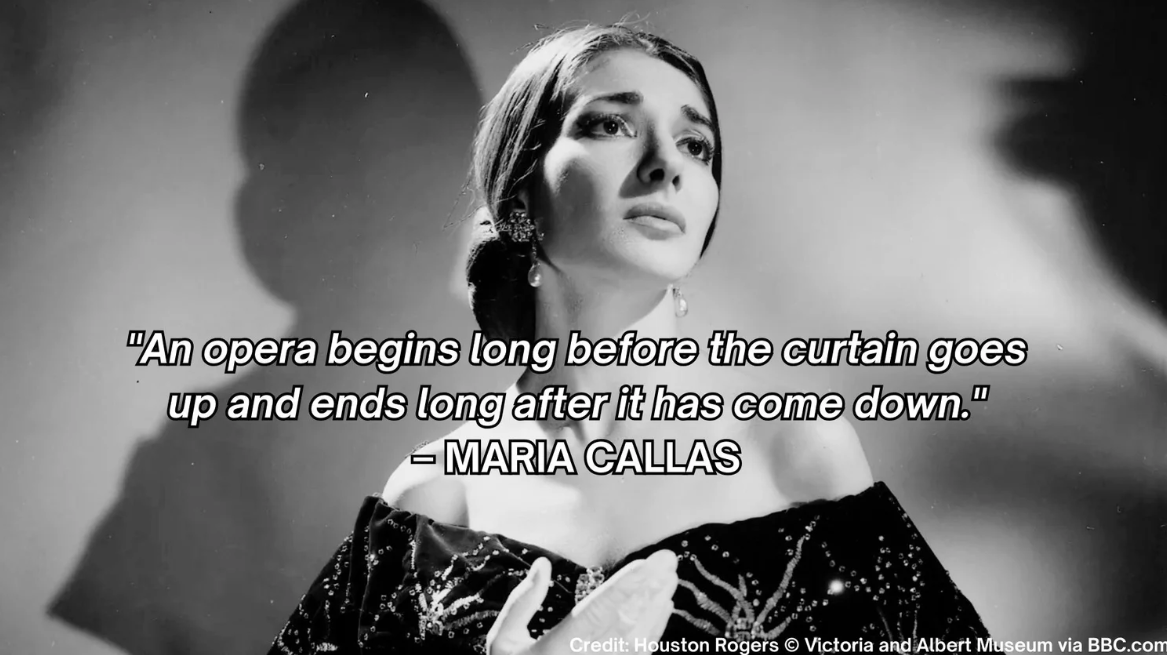
Trudy Ederle and Maria Callas lived very different lives. One crossed the English Channel. The other changed opera.
What they have in common is something much simpler.
They took what they loved seriously.
Trudy Ederle — The Woman Who Crossed the Channel
In 1926, at just 20 years old, Gertrude “Trudy” Ederle became the first woman to swim across the English Channel.
And she didn't simply complete the crossing. Her time—14 hours and 31 minutes—was almost two hours faster than the existing men's record.
I love that detail.
Not because women need to beat men for an achievement to matter, but because Ederle was swimming at a time when there were still plenty of people willing to tell women what their bodies could and couldn't do.
She had already won three medals at the 1924 Paris Olympics. Her first attempt to cross the Channel failed. She came back and tried again.
That second attempt is the part of the story I find most interesting.
We tend to remember historic achievements as though they happened in one perfect moment. But usually there was something before the photograph and the headline.
Practice.
Failure.
Another attempt.
And another decision to keep going.
Ederle later lived with significant hearing loss and taught swimming to deaf children. Her life became about more than one famous crossing.
Her story leaves me with a question I like very much:
What might we attempt if we stopped deciding in advance what we're capable of?
🎥 If you'd like to know more:
Watch the trailer for Young Woman and the Sea, the film inspired by Trudy Ederle's remarkable Channel crossing.
Maria Callas — More Than a Beautiful Voice
Maria Callas fascinates me for a completely different reason.
She wasn't simply one of the great opera singers of the twentieth century. She was an interpreter.
When Callas sang a role, she didn't seem interested in making everything sound pretty. She wanted you to understand the woman she was playing—her anger, jealousy, desperation, tenderness, pride.
Sometimes the voice was beautiful.
Sometimes it was almost uncomfortable.
But you felt something.
Born in New York to Greek parents and raised partly in Greece, Callas trained intensely from a young age before building an international career that made her one of opera's defining figures.
Her life outside the theatre was complicated and very public. So were the vocal difficulties she experienced later in her career.
I don't think we need to turn any of that into a neat story about “overcoming.”
What interests me is the artist.
She took the material she was given—a score written long before she was born—and somehow made it unmistakably hers.
As someone who loves music, that's what I hear when I listen to Callas.
Not perfection.
Presence.
She reminds me that finding your voice isn't always about creating something completely new.
Sometimes it's about taking something that already exists and bringing so much of yourself to it that nobody else could have done it quite the same way.
🎥 If you're curious:
Watch the trailer for Maria, the film starring Angelina Jolie about the final period of Callas's life.
Something to think about
Where in your own life are you still trying to do something the “right” way instead of finding your way?
Learning Never Gets Old
I have spent much of my life around languages.
Learning them. Teaching them. Making mistakes in them. Forgetting words I absolutely knew five minutes earlier.
And perhaps that's one reason I don't believe education belongs only to the young.
Some of the most satisfying learning happens when nobody is grading us.
You learn because you're curious.
Because something interests you.
Because you've always wanted to know how.
Or simply because your life has changed and you want to change with it.
You might learn another language at 60.
Take a photography course at 45.
Finally understand how to prune those roses properly.
Learn to play three chords on a guitar.
Read about astronomy because you've always looked at the night sky and wondered.
Learn enough about technology to stop being intimidated by it.
None of it has to become a career.
Learning something is reason enough to learn it.
Education Is Also Opportunity
There is another side to this conversation that matters.
For those of us who can open a computer, enroll in a course, buy a book, or walk into a library, it's easy to forget that access to education is still profoundly unequal.
The United Nations recognizes education as a human right, yet millions of children and young people around the world remain out of school.
And girls and women can face additional barriers—from poverty and displacement to discrimination, early marriage, caregiving responsibilities, and lack of access to technology.
So when we talk about learning as empowerment, I think both things can be true at once.
We can appreciate the freedom we have to keep learning throughout our lives.
And we can care about making that freedom available to more people.
What Would You Like to Learn?
Forget whether it's useful for a moment.
Forget whether you're “too old.”
Forget whether you'll ever become particularly good at it.
What are you curious about?
That's where I'd start.
Maybe there is something you've been quietly wanting to learn for years.
Write it down.
Then find one small way into it—a book, a video, a class, a conversation with somebody who already knows how.
You don't need a five-year plan.
You just need somewhere to begin.
Free Learning Resources
If you're not sure where to start, I've put together a simple guide to online learning resources covering different subjects and interests.
👉 Explore the Top 10 Free Online Learning Platforms
And then choose one.
Not ten.
One thing you're genuinely curious about.

More Emotional Growth
The Courage to Forgive Yourself

I find it much easier to forgive other people than to forgive myself.
Maybe you know the feeling.
Something you said years ago. A decision you wish you'd made differently. Someone you hurt. Something you didn't do when perhaps you should have. You can understand perfectly well that you were younger, or frightened, or doing the best you knew how to do at the time—and still find yourself going back to it.
Why did I do that?
Why didn't I know better?
Why didn't I say something?
The strange thing about regret is that we judge our past selves with knowledge they didn't have yet.
I don't think forgiving ourselves means pretending we did nothing wrong. Sometimes we did.
It doesn't mean excusing ourselves or rewriting what happened.
It means being able to look at something honestly, take responsibility for whatever belongs to us, learn from it—and eventually stop punishing ourselves for it.
That last part can be difficult.
We sometimes hold on to guilt because letting it go feels almost irresponsible. As though continuing to suffer proves that we understand what happened.
But I don't think suffering indefinitely makes us wiser.
What we do with what we've learned matters more.
Something to sit with
Think of one thing you still find difficult to forgive yourself for.
Then, instead of asking How could I have done that?, try asking:
What did I understand then—and what do I understand now?
There may be something important in the difference.
And perhaps self-forgiveness begins there.
🖤 This is one of the emotions I explore more deeply inShadow and Light: A Journal for Self-Discovery—not as something to get rid of, but as something we can become curious about.
When Change Scares You

I've moved countries many times in my life.
You'd think I would have become good at it.
I never really did.
There was always that period at the beginning when everything required more effort than it should have. Finding the supermarket. Understanding how things worked. Filling out forms. Making myself understood. Finding work. Making friends. Learning which road went where.
Even ordinary things could suddenly make me feel incompetent.
And then, slowly, they became ordinary again.
I learned the language. I found my places. I met people. I built routines. Eventually, the unfamiliar place became somewhere I knew how to live.
And then, sometimes, we moved again.
Looking back at all those beginnings has changed the way I think about fear.
I used to believe that if I was frightened or uncertain about something, perhaps that was a sign that I wasn't ready.
Now I'm not so sure.
Sometimes fear is warning us about something real, and we should listen.
Sometimes it's anxiety making everything look more dangerous than it is.
And sometimes we're simply standing in front of something we've never done before.
Those are not the same thing.
Learning to tell the difference has probably been more useful to me than learning how to “be fearless.”
Because I don't particularly want to be fearless.
I want to be able to feel afraid, look at what is actually in front of me, and decide what to do anyway.
What Has Helped Me
When something feels too big, I make it smaller.
Not How am I going to build a whole life here?
Where is the supermarket?
Not How am I going to learn this language?
What are the ten words I need today?
Not Can I really do this?
What's the next thing I can do?
I've also learned the value of finding one person who understands, asking questions instead of pretending I know, and giving myself time to be new at something.
That last one matters.
We are allowed to be beginners. At any age.
A question for you
Is there something in your life you're avoiding because it scares you?
Don't ask yourself whether you're brave enough to do the whole thing.
Ask something smaller:
What is the next step?
Maybe that's enough for today.
🖤 Fear, uncertainty, regret and the parts of ourselves we'd rather not look at are at the heart of Shadow and Light: A Journal for Self-Discovery. The journal isn't about turning every difficult emotion into something positive. It's about becoming curious about what those emotions might be trying to tell us.
More Women Who Inspire
The women I've included throughout this page couldn't be more different from one another. That's part of the point.
There isn't one way to be strong, one kind of work that matters, or one age at which we become who we're going to be.
These three women remind me of that in very different ways.
Josephine Baker: More Than the Woman on the Stage

Most people first meet Josephine Baker as an entertainer: the young American woman who went to Paris and became one of the most famous performers of her generation.
But that's only part of her story.
Born in St. Louis in 1906 and raised in poverty, Baker left the United States and found extraordinary success in France. She eventually became a French citizen and, during the Second World War, worked for the French Resistance, using her position as an international performer to help gather and carry information. France later honored her with the Croix de Guerre, the Resistance Medal and the Legion of Honour.
And she didn't stop there.
Baker had experienced racism and segregation in the United States firsthand. She refused to accept segregated audiences when she performed there and became involved in the American civil rights movement. In 1963, wearing her French military uniform, she was one of the speakers at the March on Washington where Martin Luther King Jr. delivered his I Have a Dream speech.
She also created what she called her “Rainbow Tribe,” adopting twelve children of different nationalities and backgrounds. Her idea was ambitious and perhaps idealistic: she wanted her family to demonstrate that people of different races, religions and cultures could live together.
Josephine Baker's life was complicated. There were enormous successes, financial difficulties, losses and contradictions. That's actually one reason I find her interesting.
She didn't fit neatly into one story.
Entertainer. Resistance worker. Activist. Mother. American. Frenchwoman.
She kept becoming something more.
Her contribution to France was ultimately recognised when she was inducted into the Panthéon, becoming the first Black woman to receive that honour.
🎥 If you'd like to know more about her:
Selena Quintanilla: Building Something of Her Own

Selena Quintanilla was only 23 when she died.
That fact makes everything she accomplished seem almost impossible.
She began performing as a child with her family's band, Selena y Los Dinos, and went on to become one of the defining voices of Tejano music—a genre in which women had often struggled to receive the same recognition as men.
What interests me about Selena isn't only the success.
It's how much of herself she brought to what she did.
She was Mexican-American, sang largely in Spanish while still learning to speak it fluently, and belonged to more than one cultural world. Rather than hiding those contradictions, she eventually made them part of her identity as an artist.
She also had ambitions beyond music. She designed clothes, opened boutiques and was building a fashion business of her own.
There was a playfulness about her, too. Watch old interviews and performances and you don't just see the Queen of Tejano. You see a very young woman laughing, teasing, experimenting with clothes and enjoying what she was creating.
Her life ended violently and far too soon. I don't want to turn that ending into an inspirational lesson.
I'd rather remember what came before it.
A young woman becoming very good at something she loved—and doing it without becoming somebody else first.
🎥 If you're curious about her story:
Ruth Bader Ginsburg: Change, One Case at a Time

Ruth Bader Ginsburg interests me for almost the opposite reason.
Her work wasn't fast.
It was painstaking.
Before becoming a U.S. Supreme Court Justice, Ginsburg spent years as a lawyer challenging laws that treated men and women differently simply because of their sex.
She had experienced that discrimination herself. Despite an outstanding academic record, she struggled to find work at major New York law firms after graduating because she was a woman.
Eventually, instead of simply arguing that discrimination against women was unfair, she began attacking the legal reasoning behind it.
And she was strategic.
Some of the plaintiffs she represented were men.
That was deliberate. If a law assumed women should be caregivers and men should be providers, she could demonstrate that those stereotypes restricted both sexes. Her cases challenged unequal treatment involving Social Security benefits, military benefits, jury service and other areas of American life.
I like this part of her story because it complicates the usual idea of what changing the world looks like.
Sometimes change is a protest.
Sometimes it's a speech.
And sometimes it's a woman sitting at a desk, working through an argument until she finds exactly where the logic fails.
Ginsburg later served on the U.S. Supreme Court for 27 years. She became famous enough to acquire a nickname—“Notorious RBG”—but the celebrity came very late.
The work came first.
She once offered a piece of advice that I think says a great deal about the way she approached change:
“Fight for the things that you care about, but do it in a way that will lead others to join you.”
I particularly like the second half.
Because being right isn't always enough. If we actually want to change something, sometimes we also have to work out how to bring other people with us.
🎥 If you'd like to explore her story further:
On the Basis of Sex looks at part of her early legal career, while the documentary RBG gives a much broader picture of her life and work.