

Women in Sports
What happens when winning is only part of the story?
The women featured here have broken records, won medals and competed at the highest levels of their sports. But what interests me just as much is what happened beyond the finish line: the moments when they spoke up, changed direction, questioned what was expected of them, or discovered that strength could mean something very different from simply pushing harder.
These are women who have changed their sports. In different ways, they have also changed the conversation around what it means to succeed.
Chloe Kim
More Than the Medal
Allyson Felix
Knowing Her Worth
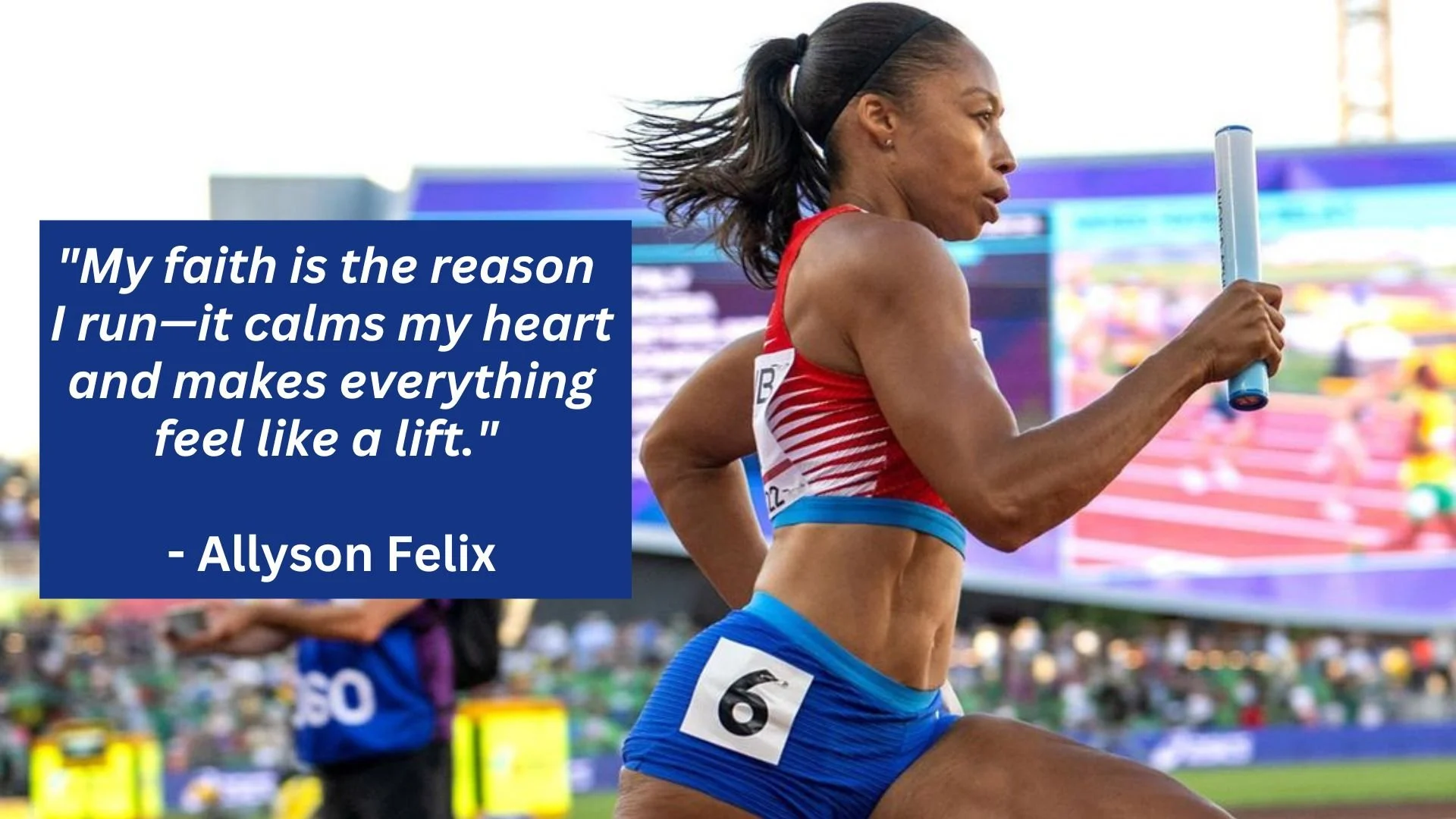
For years, Allyson Felix was known for what she could do on a track. Eleven Olympic medals made her the most decorated American track-and-field athlete in Olympic history.
Then pregnancy forced a different kind of reckoning.
While renegotiating her sponsorship contract, Felix found herself confronting a system that did not seem to know what to do with an elite female athlete who had also chosen to become a mother. The financial protections she wanted during pregnancy and after childbirth were not guaranteed.
She could have kept the dispute private. Instead, she spoke publicly.
Felix joined other women athletes in challenging the way major sponsors treated pregnancy and motherhood, helping push the industry toward stronger maternity protections. It changed the direction of her own life, too. She later co-founded Saysh, a footwear company created around women rather than treating the female body as an adaptation of the male one.
Her advocacy eventually extended beyond sport to maternal health, an issue made deeply personal by the premature birth of her daughter after Felix developed severe preeclampsia.
Perhaps that is what makes this part of her story so compelling. Felix had already proved how fast she could run. What she had to learn next was that achievement did not require her to quietly accept the terms she was given.
Sometimes strength is staying in the race.
Sometimes it is asking who wrote the rules in the first place.

Chloe Kim learned very young what it meant to be exceptional.
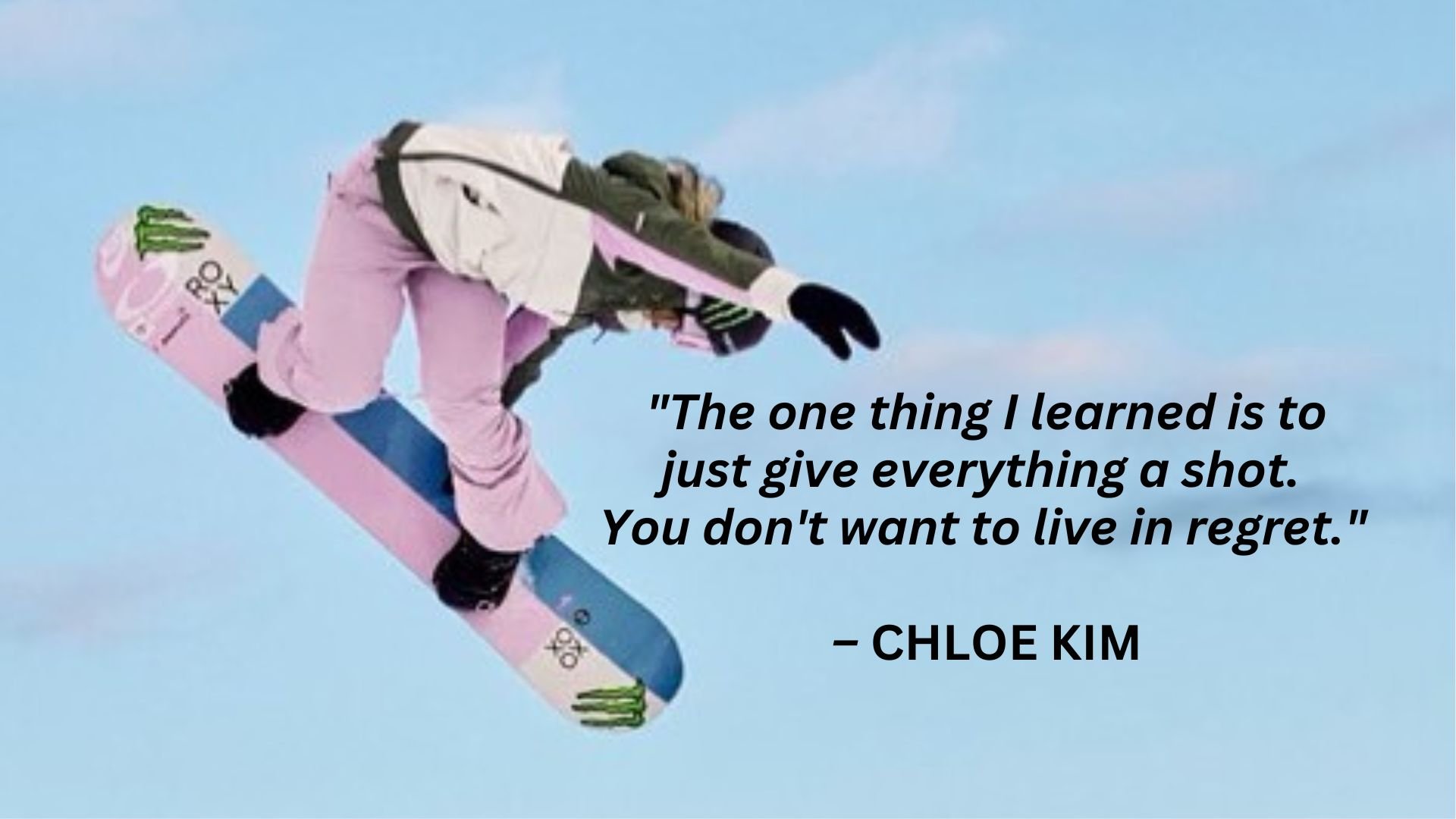
She was seventeen when she won her first Olympic halfpipe gold. Another gold followed four years later, and later an Olympic silver. From the outside, hers looked like the kind of career athletes dream about.
But success brought something Kim had not expected: the danger of becoming inseparable from it.
She has spoken openly about a period when her sense of worth became tied to her performance. If snowboarding was going well, she was doing well. If it wasn't, something felt wrong with her. Eventually, she began therapy and started doing the harder work of separating Chloe Kim the athlete from Chloe Kim the person.
That distinction matters.
Kim has also spoken about the racism she experienced as a Korean American growing up and competing in a predominantly white sport, and about the isolation that came with being both highly visible and not always feeling that she belonged.
Over time, she became increasingly willing to talk about the parts of elite sport we don't see on a podium: pressure, burnout, identity, mental health and the complicated relationship between loving what you do and being consumed by it.
Perhaps that is another kind of courage.
We spend so much time teaching women to believe they can achieve extraordinary things. Chloe Kim's story asks another question that may be just as important:
Can we know that we are still ourselves when we are not achieving anything at all?

Video Spotlight: Chloe Kim & Nancy Lieberman on Identity, Pressure and Mental Health
In this PBS conversation, Chloe Kim and basketball legend Nancy Lieberman talk about achievement, identity, mental health and what can happen when success begins to define how we see ourselves.
Ramla Ali
Fighting for Her Own Place
Ramla Ali did not grow up imagining that she would become a boxer.
Born in Somalia, she fled the civil war with her family as a child and eventually settled in England. She discovered boxing as a teenager, but for years she kept it hidden from her family, afraid they would not accept her competing in a sport they considered unsuitable for a young Muslim woman.
So she trained anyway.
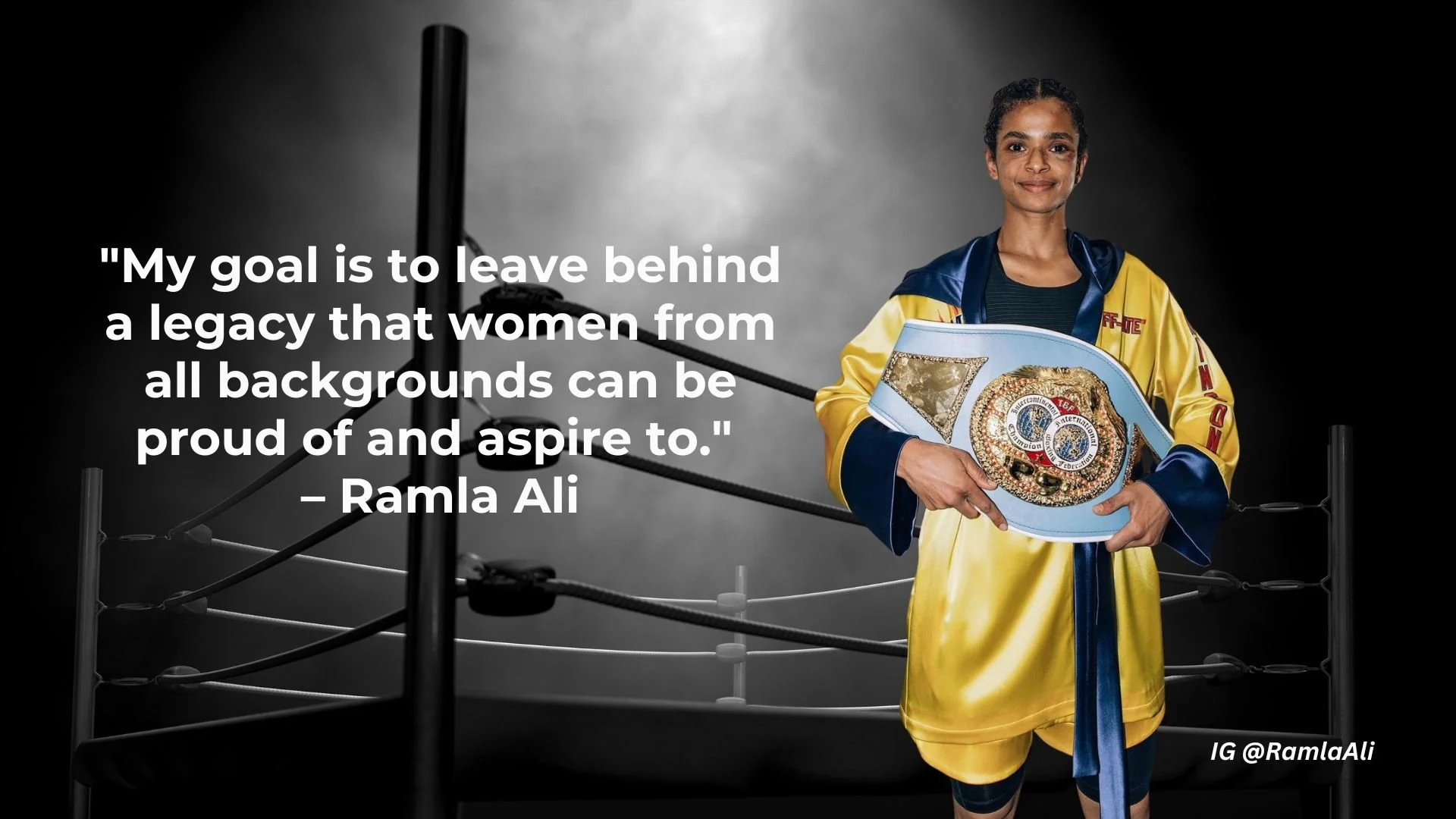
What began quietly eventually took her somewhere no Somali boxer had gone before. Ali became the first Muslim woman to win an English amateur boxing title and later the first boxer to represent Somalia at the Olympic Games.
But perhaps the most interesting part of her story is what she chose to do with the space she had fought so hard to enter.
In 2018, Ali founded the Sisters Club after remembering how difficult it had been to find a place where women like her felt comfortable training. It began as free boxing classes where Muslim women could exercise with or without their hijabs, away from judgment and discrimination. It grew into a wider community welcoming women from different backgrounds, including survivors of domestic violence and abuse.
Ali has also used her public platform to speak about refugees and displacement—subjects that are not abstract to her, but part of her own history.
There is something powerful in the way her story comes full circle.
The girl who once had to hide the fact that she boxed grew into a woman who created a place where other women would not have to hide in order to belong.
Maybe breaking a barrier is only the beginning.
What matters, too, is what we make possible for the women who come after us.
Yusra Mardini
More Than a Refugee

Before Yusra Mardini became known around the world as a refugee, she was a girl in Damascus who loved to swim.
She trained seriously, competed internationally and dreamed of reaching the Olympics. Then war changed the course of her life.
In 2015, at seventeen, Yusra fled Syria with her older sister, Sara. During their journey across the Aegean Sea, the engine of the overcrowded dinghy carrying them toward Greece failed and the boat began taking on water. Yusra, Sara and two other passengers entered the sea and helped guide the boat toward the island of Lesvos for hours.
Everyone survived.
Less than a year later, Yusra walked into the Olympic stadium in Rio as a member of the first Refugee Olympic Team. She would compete again at the Tokyo Games.
It is an extraordinary sequence of events. But there is another part of Yusra's story that is easier to overlook.
She has spoken about what it meant to suddenly acquire a new identity: refugee. Before the war, she had been a daughter, a sister, a swimmer, a teenager with plans. After leaving Syria, one word threatened to become the way the world understood everything about her.
Much of her work since then has been about challenging that idea.
As a UNHCR Goodwill Ambassador and through the Yusra Mardini Foundation, she has advocated for displaced people to have access to the things that allow a life to begin again: education, opportunity, sport, community and the chance to be seen for who they are rather than only for what happened to them.
Swimming carried Yusra through very different waters. But perhaps the most important thing she has done since is remind us not to reduce a human being to the hardest chapter of her life.
We are shaped by what happens to us.
We are not only what happens to us.