
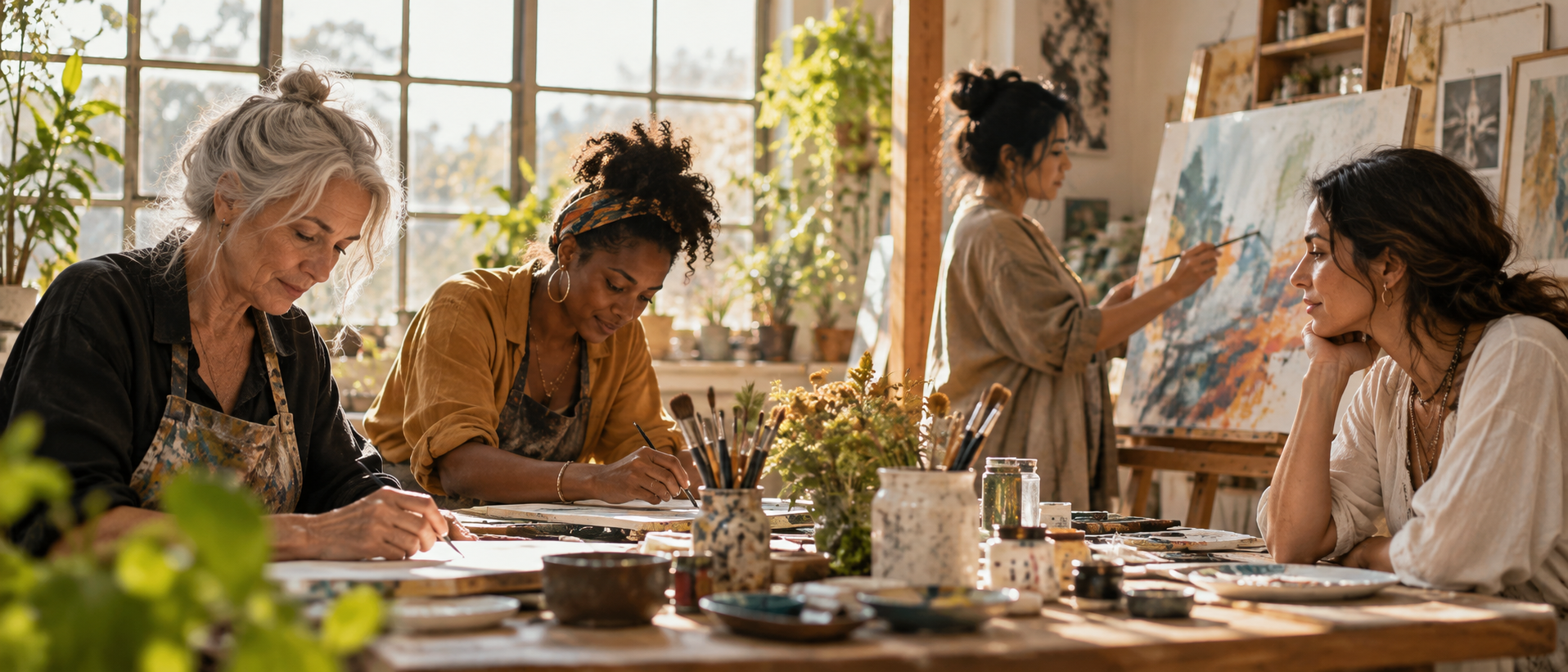
Women in the Arts
What can art hold that history sometimes cannot?
A memory. A voice. A place that no longer exists. An experience that was ignored, misunderstood or simply never written down.
The women featured here work in different forms—literature, visual art, music, dance—but each has found a way to look closely at something and ask us to look again.
Their work reminds us that art doesn't always give us answers.
Sometimes it simply makes something impossible not to see.
NGUYỄN PHAN QUẾ MAI
Who Gets to Tell the Story?
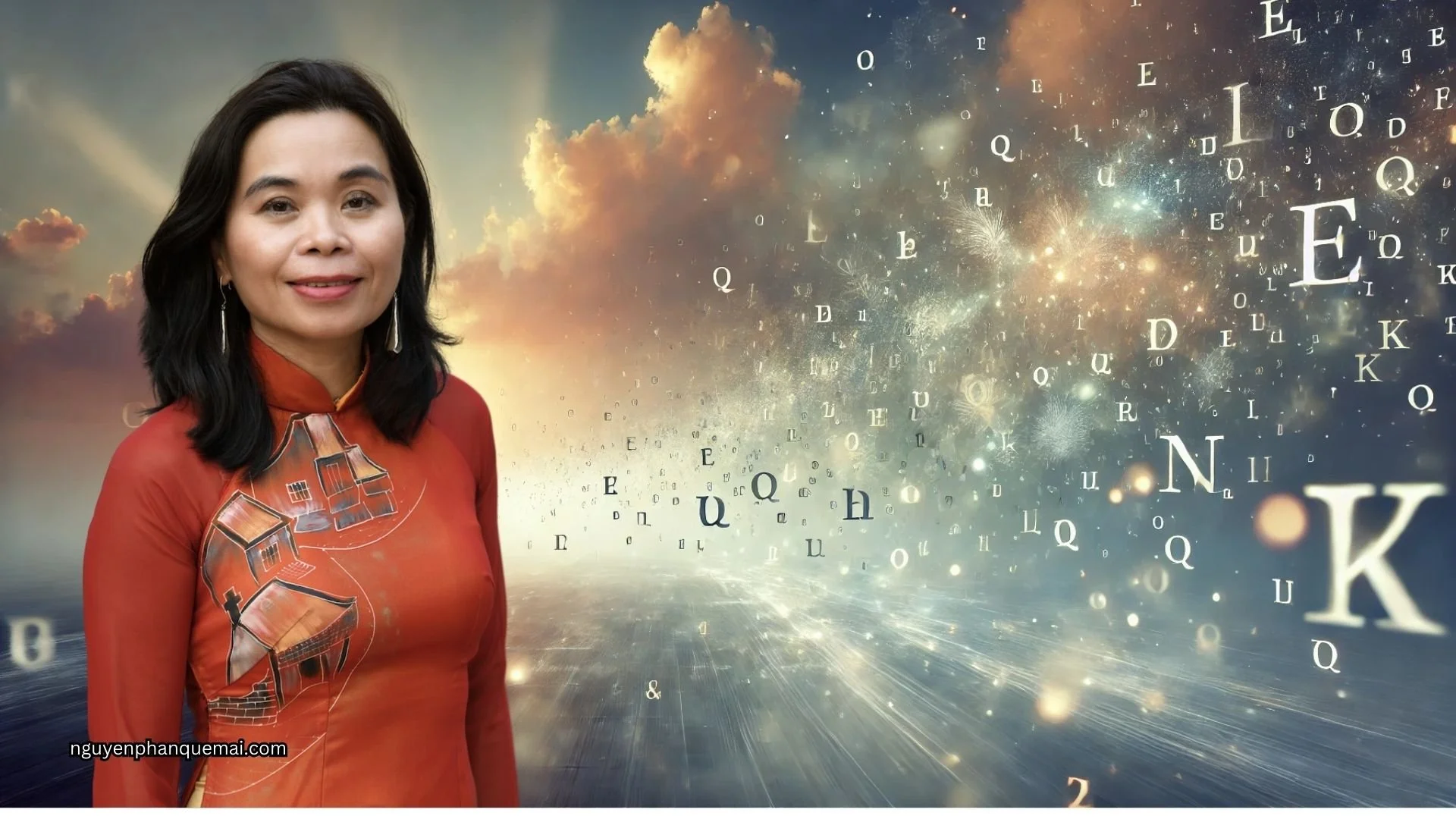
Nguyễn Phan Quế Mai grew up surrounded by stories about war.
But many of the stories she encountered in English about Việt Nam did not sound like the country she knew.
They were often told from somewhere else.
Born in northern Việt Nam and raised in the Mekong Delta, Quế Mai grew up listening to the experiences of relatives and others whose lives had been shaped by war, political upheaval and loss. Long before she became a novelist, she was already paying attention to what people remembered—and to what history sometimes left out.
She first became known as a poet writing in Vietnamese. Later, she began writing fiction directly in English.
That choice mattered.
With The Mountains Sing, her first novel in English, Quế Mai tells the story of one Vietnamese family across several generations of twentieth-century history. War is part of the novel, but Việt Nam is not reduced to war. There are families and meals, traditions and proverbs, tenderness and betrayal, ordinary lives continuing inside extraordinary events.
Her second English-language novel, Dust Child, looks at another legacy of the Việt Nam War: Amerasian children born to Vietnamese women and American servicemen, and the families whose lives remained entangled with the conflict long after the fighting ended.
Again, Quế Mai turns toward people who can disappear when history is told in broad strokes.
Her work has now reached readers in more than twenty-five languages. She has also translated literature between Vietnamese and English, carrying stories in both directions.
Perhaps that is what makes her work so interesting.
She isn't simply writing about history.
She is asking who has been allowed to tell it.
And what changes when the people who lived inside a history finally get to speak for themselves?

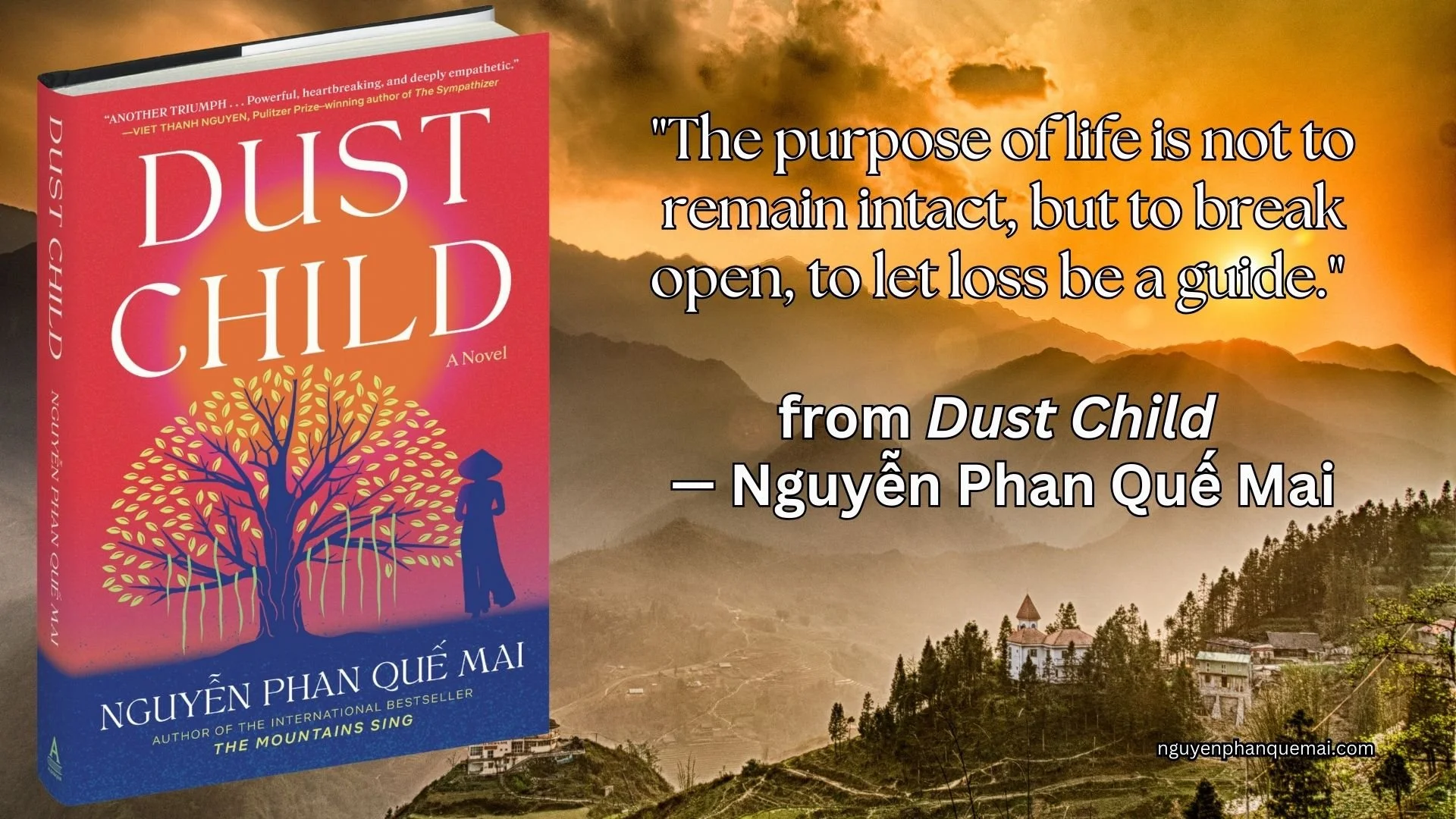
Listen: Nguyễn Phan Quế Mai Reads from The Mountains Sing
Sometimes the best way to understand a writer is to hear the words in her own voice.
Listen to Nguyễn Phan Quế Mai read from The Mountains Sing, the novel in which she brings generations of Vietnamese history into the intimate story of one family.
MARÍA BERRÍO
What Imagination Refuses to Lose

María Berrío makes pictures of difficult things.
Migration. Displacement. Children leaving one place without knowing what waits for them in another.
But her paintings rarely look the way we might expect such subjects to look.
They are filled with colour, animals, plants, strange landscapes and figures that seem to belong partly to this world and partly to another one.
Berrío was born in Bogotá, Colombia, and now lives and works in New York. She creates her large-scale works by layering pieces of Japanese paper with watercolour, building images that feel almost like stories assembled fragment by fragment.
That way of working seems particularly suited to what interests her.
Her art often returns to people whose lives have been disrupted by forces larger than themselves, especially migrants, women and children. But rather than reducing them to what they have suffered, Berrío gives them interior worlds.
Fantasy remains.
Beauty remains.
The possibility of somewhere else remains.
In her series The Children’s Crusade, Berrío drew on the medieval story of children travelling across Europe and brought it into conversation with present-day migration. Her young figures move through landscapes that can feel beautiful and threatening at the same time. Some appear human; others become birds or strange hybrids. Reality and imagination begin to overlap.
Perhaps that is the part of her work that stays with me most.
When we speak about displaced people, especially children, we often speak in numbers. How many crossed a border. How many arrived. How many disappeared.
Berrío asks us to look at them differently.
A child who has lost a home has not lost an imagination.
A person forced to leave one world behind is still capable of imagining another.
Maybe art cannot undo what happened.
But it can refuse to let suffering become the only thing we see.
AMINA FIGAROVA
What Talent Needs to Be Heard
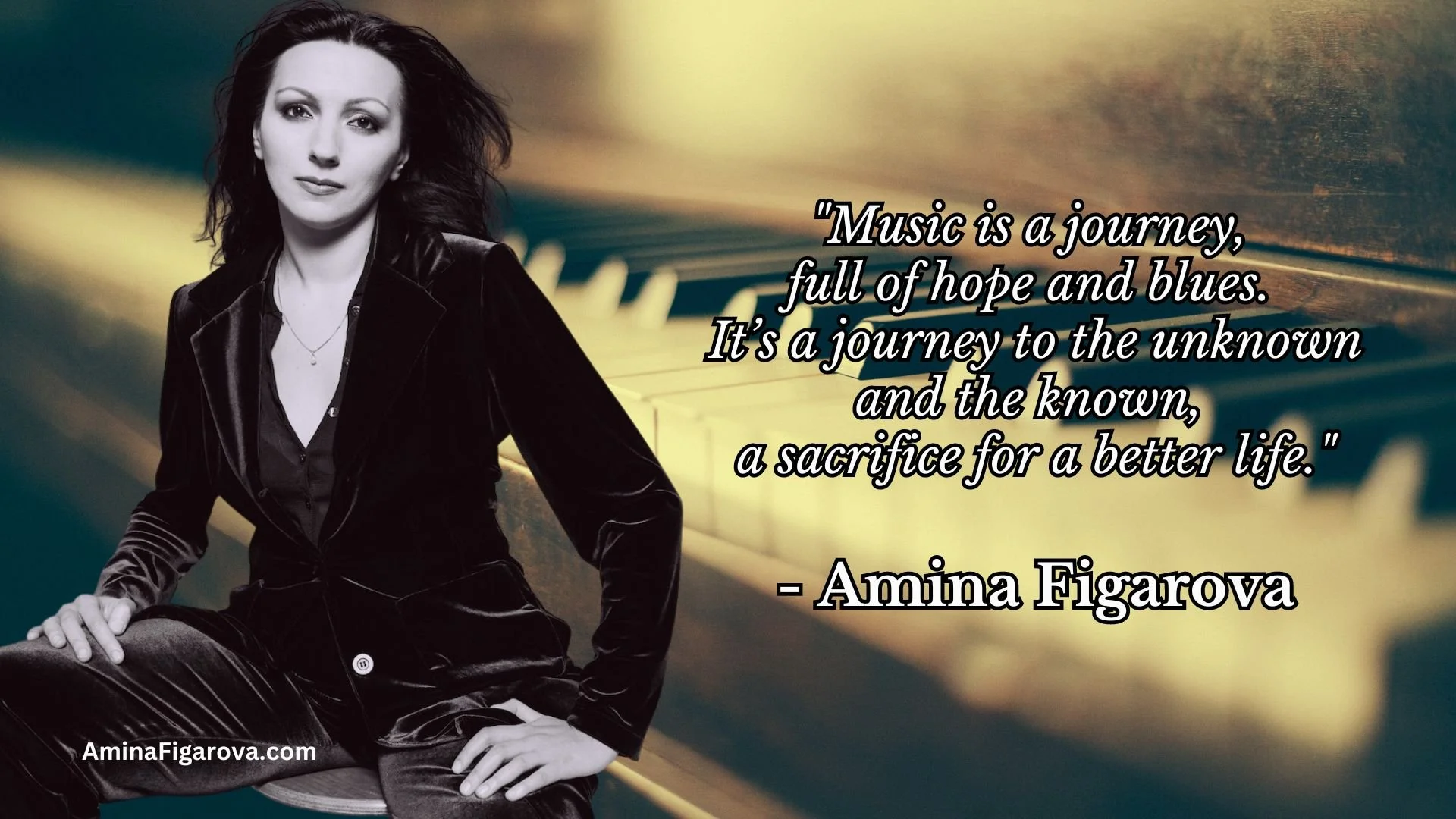
Amina Figarova knows what it means for music to take you somewhere unexpected.
Born in Baku, Azerbaijan, she trained as a classical pianist before finding her way to jazz. That journey eventually took her through Rotterdam and Boston and, years later, to New York.
But music kept taking her elsewhere.
During her travels in South Africa, Figarova met young musicians whose talent impressed her. What stayed with her was not what they lacked musically.
It was what they lacked around the music.
Instruments. Resources. Opportunities.
She began wondering what she could do.
That question eventually became part of Suite for Africa, a project that brought Figarova and her jazz sextet together with the Matsiko World Orphan Choir, a group of orphaned and at-risk young people from Liberia.
The result is not simply music written about them.
Their voices are inside it.
That matters.
Figarova has spent decades composing and performing jazz around the world. Her music carries traces of the different places she has lived and travelled through, including the folk traditions of her native Azerbaijan. But Suite for Africa added something else: a collaboration in which young voices that might easily go unheard became part of the work itself.
There is an easy way to talk about talent. We like to believe that if someone has enough of it, eventually the world will notice.
But talent doesn't exist outside circumstance.
Someone needs an instrument.
Someone needs a teacher.
Someone needs the time and the chance to practise.
Someone, sometimes, needs to listen.
Figarova's story makes me think about all the ability in the world that we never get to see—not because it isn't there, but because opportunity isn't distributed as freely as talent is.
Perhaps opening a door doesn't create someone's gift.
It simply gives that gift somewhere to go.
LA RIBOT
What Happens When We Stop Staying in Our Place?
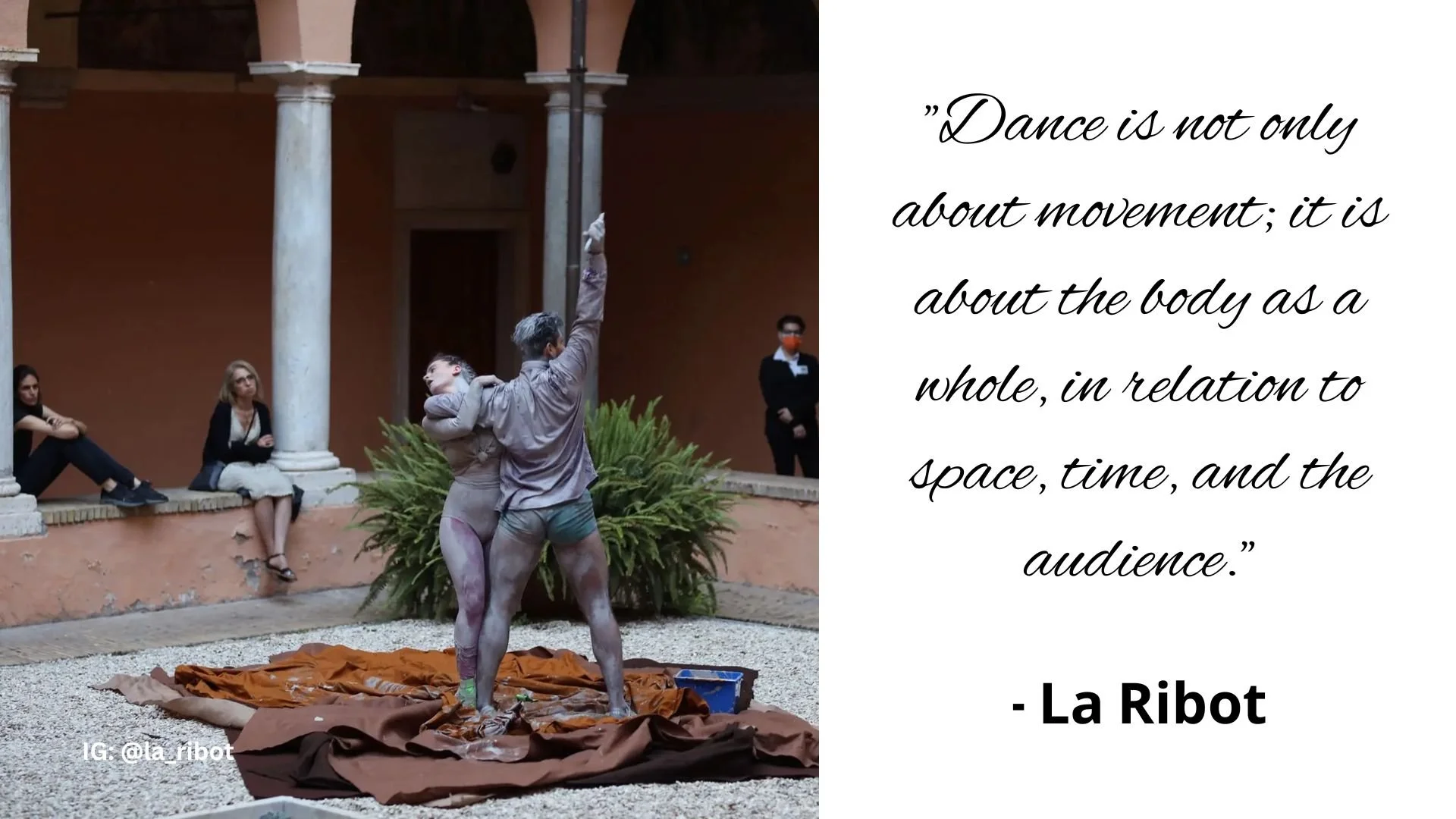
La Ribot is a choreographer.
Except that doesn't quite describe what she does.
Her work can be dance, performance, visual art, film or installation. Sometimes it is several of those things at once.
Perhaps the difficulty of defining her is part of the point.
Born María Ribot in Madrid, La Ribot began creating work during the cultural changes taking place in Spain in the 1980s. Over the decades that followed, she became known for questioning where dance belongs, what a dancing body can be, and even what an audience is supposed to do while watching it.
She has taken dance out of the traditional theatre and into galleries, museums and other spaces. She has used objects, drawing, video, humour and the human body as parts of the same artistic language.
One of her best-known projects, Piezas distinguidas, began as a series of short performances in the 1990s and continued developing over many years. Some last only a few minutes. Some blur the distinction between choreography and visual art. Together, they ask us to reconsider something we thought we already understood.
What is dance?
La Ribot has never seemed particularly interested in providing a neat answer.
Her work keeps moving across the lines we use to separate one art form from another: dance from theatre, performance from exhibition, body from object, artist from audience.
In 2020, the Venice Biennale awarded her the Golden Lion for Lifetime Achievement in Dance, recognising a career built, in many ways, on refusing to remain inside the boundaries of dance at all.
There is something I like very much about that contradiction.
We spend so much of our lives learning where things belong.
This is art. That is dance.
This is the stage. That is the audience.
This is what a body is supposed to do.
La Ribot keeps moving the lines.
Maybe that is one of the things art is for.
Not always to give us something new to look at.
Sometimes to make us realise that we could have been looking differently all along.
