
What Happens Between the Lines

Theatre, silence, and the stories we tell onstage
At university, I was part of a small theatre group made up of students studying Russian language and literature.
We weren't actors.
We were students who loved Russian literature and, for reasons I can no longer entirely remember, decided it would be a good idea to perform Chekhov.
In Russian.
One of the plays we performed was The Cherry Orchard.
I remember learning the lines, of course. But what has stayed with me all these years isn't really the lines.
It's the pauses.
Chekhov leaves so much sitting between what people say and what they actually mean.
Characters talk about money, the orchard, Moscow, dinner, the weather.
Meanwhile, an entire way of life is disappearing.
The family estate is going to be sold. The cherry orchard will be cut down. Everyone knows change is coming, and yet people keep talking, remembering, avoiding, hoping, misunderstanding one another.
At that age, I was concentrating mostly on remembering my Russian and not making a fool of myself onstage.
I understand the play differently now.
Maybe that's inevitable.
We return to books, films and plays years later as different people.
Things we barely noticed at twenty suddenly seem to be the whole point.
The Things We Don't Say
I've been thinking about silence a lot in my own writing.
Not silence as emptiness.
The other kind.
The silence after someone says something and nobody answers.
The subject a family carefully avoids.
The joke that isn't really a joke.
The conversation about something trivial when both people know they're actually talking about something else.
Chekhov understood that extraordinarily well.
And theatre makes it visible in a way that's difficult to reproduce anywhere else.
On a page, you can write that a character pauses.
Onstage, we have to sit inside the pause with her.
We watch where she looks.
We notice whether another character moves.
We hear the chair scrape.
We wait.
Sometimes nothing happens.
And yet something has happened.
I think that's one of the things I love about theatre.
It doesn't always explain itself.
It asks us to watch people closely enough to notice what they're not telling us.
Whose Stories Reach the Stage?
Of course, who gets to tell those stories has changed enormously over time.
Women have always performed, written and worked in theatre, but they haven't always had equal access to the institutions that decide which plays are produced, funded and taken seriously.
And “women in theatre” doesn't mean only actresses.
There are playwrights.
Directors.
Producers.
Designers.
Writers creating something alone in a room.
People deciding which stories receive a stage in the first place.
That last part interests me especially.
Because theatre isn't simply about who stands under the lights.
It's also about who gets to decide what the lights are pointed at.
The four women I've chosen here work in very different parts of that world.
Lynn Nottage writes plays.
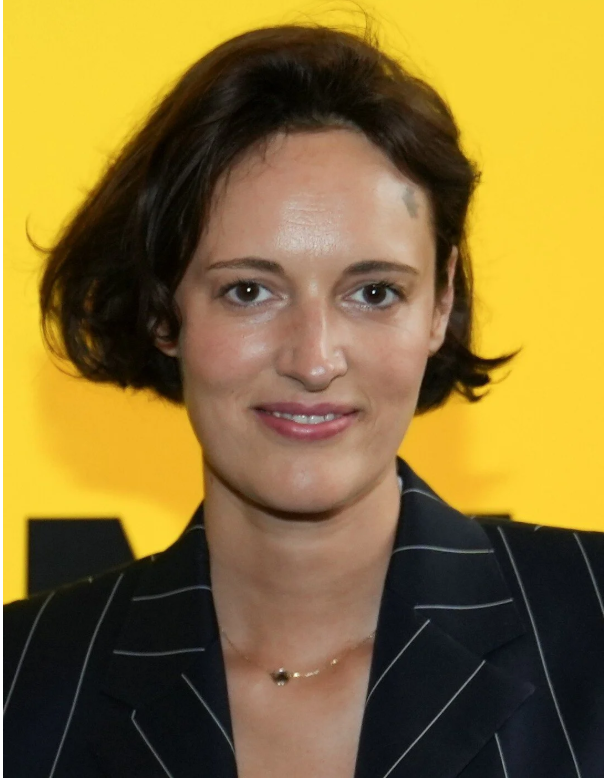
Phoebe Waller-Bridge began with herself, a microphone and a one-woman show.
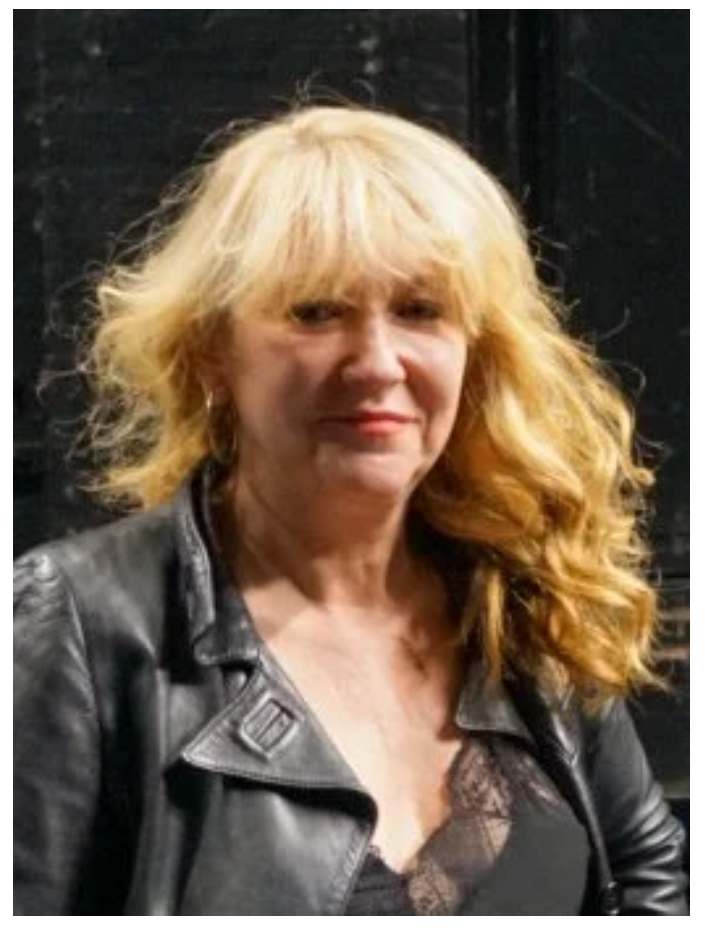
Sonia Friedman produces other people's work and helps decide what reaches major stages.
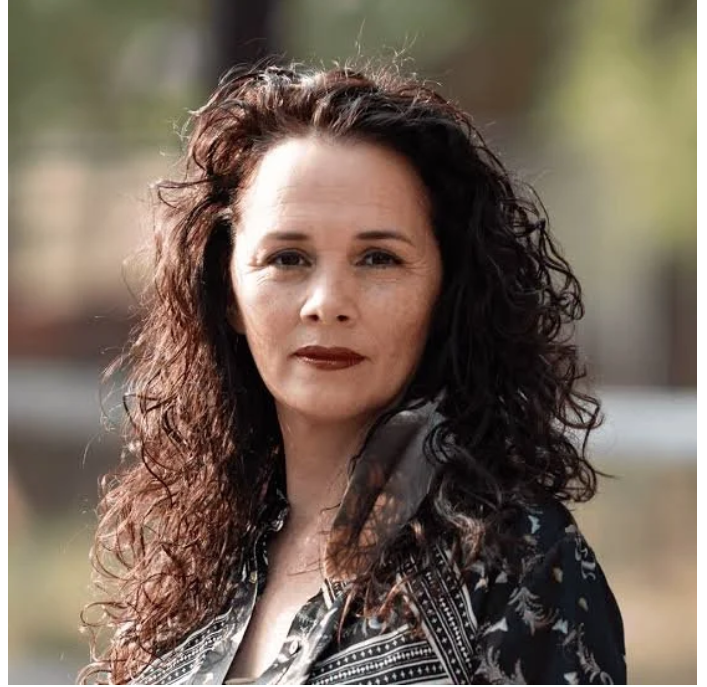
Larissa FastHorse has asked American theatre to look more carefully at who gets represented—and who gets to do the representing.
Putting them together gives us four different ways of looking at the same question:
Who gets to tell the story, and how?
Four Women, Four Ways of Making Theatre
Theatre is collaborative.
The person we see onstage is only one part of it. Someone wrote the words. Someone decided to produce them. Someone shaped the performance. Someone decided which story was worth putting in front of an audience.
These four women occupy very different places in that process.
That's why I wanted them together.
Lynn Nottage — Looking Where Others Don't
Lynn Nottage is the first and, so far, only woman to win the Pulitzer Prize for Drama twice: first for Ruined in 2009 and again for Sweat in 2017.
But the prizes aren't really what interests me about her.
It's where she looks.
Her plays have taken us into a bar in a struggling Pennsylvania factory town, a brothel in war-torn Congo, a nineteenth-century seamstress's room, and the kitchen of a sandwich shop staffed by people who have been incarcerated.
These aren't settings chosen simply to make a point.
They're places where people work, argue, joke, disappoint one another, survive and try to make a life.
I particularly like that about her writing.
Big subjects—race, class, war, poverty, work, incarceration—become individual people in a room together.
And once people are in the room, things are rarely simple.
That's theatre.
Watch Lynn Nottage
In this short video, Nottage talks about Clyde's, her play about people rebuilding their lives while working together in a sandwich shop.
Watch Lynn Nottage talk about Clyde's
Phoebe Waller-Bridge — Letting a Woman Be Difficult
Before Fleabag became a television series, it was a one-woman stage show.
Waller-Bridge first performed it at the Edinburgh Fringe in 2013. The television phenomenon came later.
I think that's worth remembering.
At the beginning there wasn't an enormous television production or a character known around the world.
There was a woman onstage telling us things about herself that weren't always flattering.
Fleabag can be selfish, funny, lonely, sexual, cruel, ashamed, loving and infuriating—sometimes within minutes.
And perhaps that's what I find most interesting about the character.
She doesn't ask us to approve of her.
Women in stories have so often been divided into categories: good woman, difficult woman, victim, mother, seductress, heroine.
Waller-Bridge lets her character be contradictory.
Real people usually are.
And there's something else Fleabag does that fascinates me as a writer: she speaks directly to us while hiding things from almost everyone around her.
We're made her confidants.
Until even that relationship becomes more complicated.
It's a clever reminder that telling a story and telling the truth aren't necessarily the same thing.
Watch Phoebe Waller-Bridge
Her Saturday Night Live monologue isn't Fleabag, but it's a good introduction to the dry, uncomfortable humor that makes her writing so recognizable.
Watch Phoebe Waller-Bridge's SNL monologue
Sonia Friedman — Deciding What Reaches the Stage
Sonia Friedman isn't a playwright and she isn't the person we usually see taking the bow.
She's a producer.
And I wanted to include her precisely because of that.
We talk a lot about giving people a voice. But in theatre, someone also has to decide which voices receive a stage, a theatre, a budget and an audience.
That is an enormous kind of influence.
Friedman has spent decades producing theatre in London, New York and beyond. Her company has now developed, initiated and led more than 300 productions.
The range is striking—from enormous commercial productions such as Harry Potter and the Cursed Child and Stranger Things: The First Shadow to new plays, revivals and work that asks audiences to take a chance on something less familiar.
What interests me about producing is the combination of art and practicality.
You can believe passionately in a play.
Someone still has to work out how to put it on.
Who will perform it?
Where will it run?
What will it cost?
Will anybody buy a ticket?
That isn't separate from storytelling.
It's part of how a story reaches us.
Something I like about Sonia Friedman
Even after hundreds of productions, Friedman has spoken about theatre as something she still hasn't completely figured out.
I like that.
Perhaps the people who remain curious about their work are often the ones who stay interesting at it.
Explore Sonia Friedman Productions
Larissa FastHorse — Who Gets to Represent Whom?
Larissa FastHorse is a Sicangu Lakota playwright whose work raises a question theatre has struggled with for a long time:
Who gets to tell whose story?
Her play The Thanksgiving Play uses satire to explore exactly that problem.
Four well-intentioned white theatre-makers are trying to create a culturally sensitive Thanksgiving play for schoolchildren.
They want to represent Native people responsibly.
There's one rather significant problem.
There are no Native people involved.
It's funny.
And uncomfortable.
Which is probably the point.
FastHorse's work goes beyond simply putting Indigenous characters onstage. She has also worked on ways of making theatre with communities rather than merely creating stories about them.
That distinction matters.
Representation isn't only about who appears in the finished story.
It's also about who was invited into the room while the story was being made.
And that brings us all the way back to the question at the beginning of this section:
Who gets to tell the story, and how?
Listen to Larissa FastHorse
In this conversation, FastHorse talks about storytelling, community, land and the collaborative nature of theatre.
Watch Larissa FastHorse on storytelling and community
Back to Chekhov
When I think back to that little university theatre group performing The Cherry Orchard in Russian, I don't remember whether we were particularly good.
I suspect we weren't.
But I remember what it felt like to stand inside someone else's words.
To wait for another character to finish speaking.
To listen for my cue.
To discover that a pause could mean as much as a sentence.
Years later, I'm still interested in the same thing.
What do people say?
What do they leave out?
Who gets to speak?
And who is listening?
Perhaps that's why theatre still interests me.
Not because it always tells us the truth.
Because it gives us a room in which to watch people trying to tell theirs.
A Question to Carry With You
Think of a play, film or performance you still remember years later. What stayed with you—the words, the story, a character, or perhaps something that was never said at all?

What Makes a Good Day?
Some thoughts on happiness, well-being, and the ordinary things that help
The other day, I watched my nephews, Bruno and Gabriel, racing around the yard.
There was running, shouting, a game of catch that became increasingly competitive, several dramatic dives that weren't remotely necessary, and a lot of laughing.
Eventually they collapsed on the grass.
I sat there watching them and thought:
When did having fun become so complicated?
I don't mean that I want to run around the garden throwing myself onto the grass.
I'm quite happy to leave that to Bruno and Gabriel.
But children seem remarkably good at being completely inside whatever they're doing.
They're not thinking about whether the afternoon is productive.
They're not wondering whether they should be doing something more useful.
They're certainly not asking whether this particular game of catch is contributing sufficiently to their personal growth.
They're playing because, for that moment, playing is enough.
Adults have rather more complicated lives.
We have work, bills, people we love and worry about, bodies that don't always cooperate, houses that need attention, appointments, losses, responsibilities and phones that seem determined to follow us everywhere.
So perhaps adult happiness isn't supposed to look like two boys laughing on the grass.
But watching them made me wonder what it does look like.
Happiness Is a Very Big Word
I've become a little suspicious of the word happiness.
We talk about it as though it were a destination.
I just want to be happy.
It's such an understandable wish.
But what does it actually mean?
I don't walk around feeling happy all day. I don't think anybody does.
A perfectly good day can contain irritation, tiredness, worry, boredom, pleasure, laughter and a lovely dinner—all within a few hours.
Maybe well-being is a more useful idea.
Not permanent happiness.
A life in which there are enough things that make us feel interested, connected, useful, rested, amused, loved, challenged or simply glad to be here.
For me, those things are often very ordinary.
A good walk.
Writing something and knowing I've finally found the sentence I was looking for.
Cooking something delicious.
Playing the piano.
Talking to someone I love.
Reading a book I don't want to put down.
Sitting outside when the weather is beautiful.
Laughing hard enough that I temporarily forget whatever I was worrying about.
None of these things fixes a difficult life.
They're simply part of living one.
And I'm learning not to underestimate them.
What The How of Happiness Made Me Think About
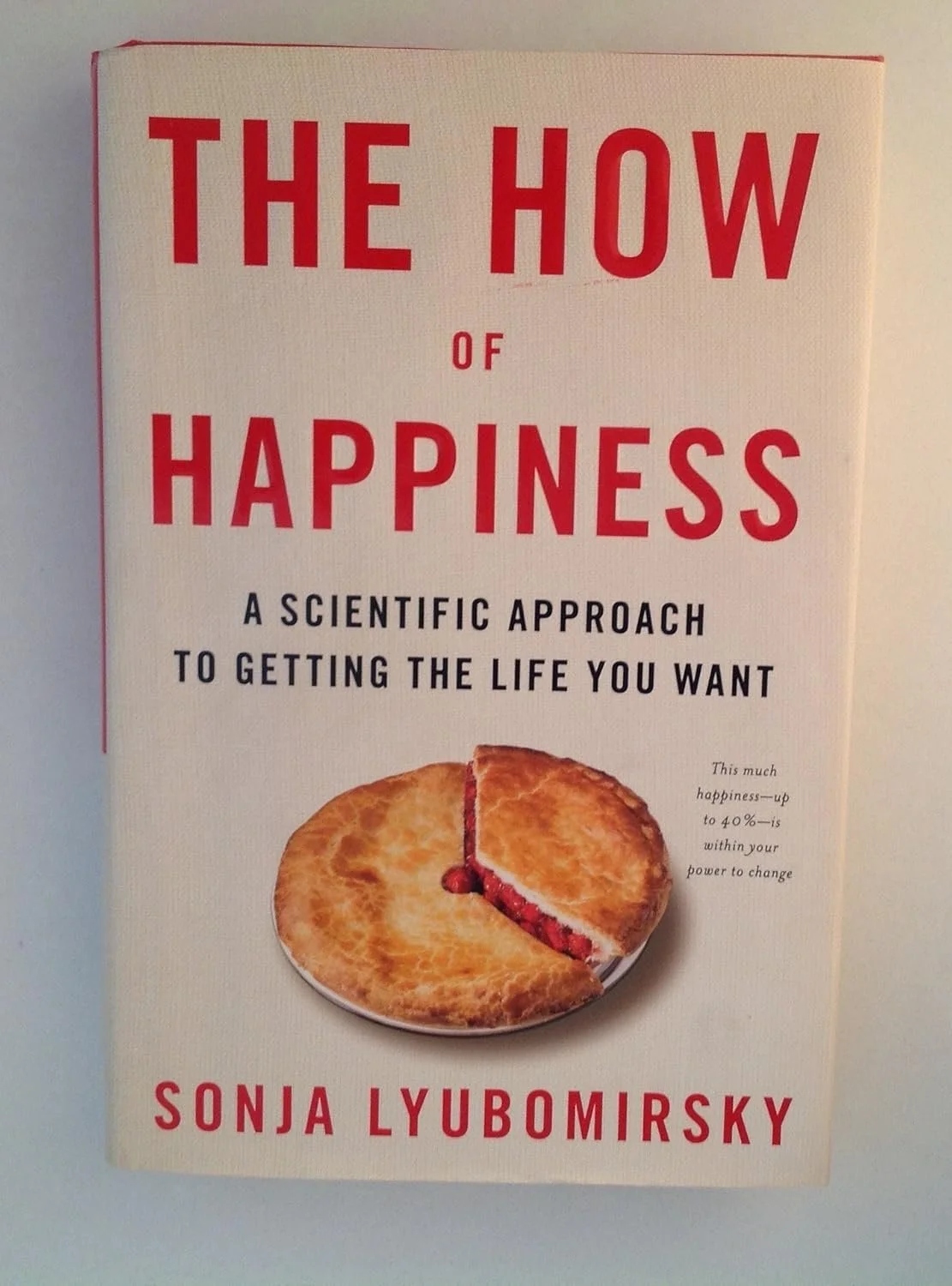
Some time ago I read Sonja Lyubomirsky's The How of Happiness.
What stayed with me wasn't a formula for becoming happier.
It was the simpler idea that some of the things we repeatedly do can influence how we experience our lives.
That sounds obvious.
But I think there's a useful distinction between trying to make ourselves happy and noticing the conditions under which we tend to feel better.
For example, I know movement helps me.
Being outside helps.
People help—although sometimes being alone helps too.
Having something I'm curious about helps enormously.
So does having something to look forward to.
Gratitude can help, but I don't want to turn that into another obligation either.
I've had days when writing down three things I'm grateful for felt meaningful.
I've had other days when it would have felt ridiculous.
Sometimes we're sad.
Sometimes something is wrong.
Sometimes gratitude isn't the appropriate response.
What I took from Lyubomirsky's work is not that we can control our happiness if we perform the correct habits.
We can't.
It's that we're not entirely passive either.
There are things we can learn about ourselves.
What tends to make a good day better?
What repeatedly makes a difficult day worse?
What do I keep saying I enjoy and then somehow never make time for?
Those questions are more useful to me than trying to become a happier person.

The Small Things I Repeat
I like routines.
My mornings tend to have a shape to them.
I get up. I make my coffee. I move around. I usually know roughly when I'll write, exercise or begin work.
Some parts change. Others have become automatic.
I used to think a good morning routine needed to contain all the correct things: breathing, gratitude, affirmations, stretching, mindfulness.
I've tried plenty of them.
Some stayed.
Some didn't.
These days I'm much less interested in constructing the perfect morning.
I'm more interested in noticing what actually helps me.
Movement helps.
A little quiet helps.
Knowing what I want to do with the morning helps.
And coffee definitely helps.
Other people will have completely different answers.
Someone else's ideal morning might involve sleeping until nine, eating breakfast with three noisy children and never meditating once.
That's the problem with turning personal habits into universal advice.
What works for me is information about me. It isn't necessarily instruction for you.
And then I would close the section very simply:
A Question to Carry With You
What makes an ordinary day feel like a good day to you?
Not an exceptional day.
Not a holiday.
Not the day you get wonderful news.
Just a Tuesday.
What tends to be there when you reach the end of one and think:
That was a good day.
I'd be curious about your answer.
I'm still figuring out mine.
Three Talks That Made Me Think Differently About Resilience
I've become wary of the way we sometimes talk about resilience.
We make it sound like a personality trait. Some people have it. Some don't.
Or worse, we turn it into another expectation: something difficult happens, and now we're supposed to be resilient on top of everything else.
These three talks approach it differently.
I came away from each of them with something useful—not a formula for getting through difficult times, but a different way of thinking about what we do when life doesn't go according to plan.
Lucy Hone — The Three Secrets of Resilient People
Lucy Hone studied resilience long before she desperately needed it herself.
In 2014, her 12-year-old daughter, Abi, was killed in a car accident.
Suddenly the researcher studying resilience was also a grieving mother trying to survive something she could not change.
That's what makes this talk different for me.
Hone doesn't pretend that resilience means overcoming pain or somehow turning tragedy into something positive.
Instead, she talks about learning to recognize what we cannot change while paying attention to what we can still choose.
One question from her talk has stayed with me:
“Is what I'm doing helping me or harming me?”
I like its simplicity.
Not: Am I coping correctly?
Not: Shouldn't I be over this by now?
Just: Is this helping me or harming me?
There are times when that may be enough of a question.
🎥 Watch Lucy Hone: The Three Secrets of Resilient People
Susan David — The Gift and Power of Emotional Courage
Susan David's talk challenges an idea I think many of us have absorbed without realizing it:
That difficult emotions are problems we should get rid of.
Fear. Anger. Sadness. Disappointment. Grief.
We label some feelings “negative” and then become frustrated with ourselves for having them.
David offers another possibility.
What if we stopped trying so hard to feel the right thing?
Her work on emotional agility is about allowing difficult emotions to exist without letting them make every decision for us.
That distinction matters to me.
Feeling something isn't the same as becoming it.
I can be afraid without deciding that fear gets the final word.
I can be angry without pretending I'm not.
I can be sad without immediately needing to turn the sadness into a lesson.
Sometimes a feeling is simply information about what matters to us.
And perhaps listening to it is more useful than trying to make it disappear.
🎥 Watch Susan David: The Gift and Power of Emotional Courage
Kelly McGonigal — How to Make Stress Your Friend
I almost want to argue with the title of this one.
I'm not sure I particularly want stress as a friend.
But Kelly McGonigal made me reconsider something else: the assumption that every sign of stress means something is going wrong.
A racing heart before something important.
Butterflies in the stomach.
That surge of nervous energy when we're about to do something difficult.
We usually interpret those sensations as: I can't handle this.
McGonigal asks whether another interpretation is possible.
Perhaps sometimes the body is saying:
This matters. Get ready.
I like that distinction.
It doesn't mean chronic stress is good for us, and it certainly doesn't mean we should seek out more of it.
It means we don't necessarily have to become frightened of every stress response we experience.
Sometimes we're stressed because life is hard.
Sometimes we're stressed because we care.
And sometimes we're stressed because we're doing something that asks more of us than staying safely where we are.
🎥 Watch Kelly McGonigal: How to Make Stress Your Friend
What I Take From All Three
These women aren't saying exactly the same thing.
That's partly why I wanted to put them together.
Lucy Hone asks us to notice what helps.
Susan David asks us to make room for what we feel.
Kelly McGonigal asks us to reconsider what some of our body's signals might mean.
None of them promises a life without pain, fear or stress.
And perhaps that's the part I find most useful.
Resilience isn't becoming someone who isn't affected by life.
It's learning what helps us live through the parts that affect us deeply.
A Question to Carry With You
When something is difficult, what actually helps you—not what you think should help, but what genuinely does?
Women Who Made Room for Others
Education, knowledge, and the doors women open
I've always had a complicated relationship with the word pioneer.
We use it so often that sometimes we forget what it actually means to be the first—or among the first—to enter a place where people like you were not expected.
It isn't simply an achievement to add to a biography.
Someone has to walk into that classroom first.
Someone has to insist on being educated.
Someone has to do the research, write the book, teach the students or ask the questions before it becomes ordinary for other women to do the same.
The four women here lived in different countries, different centuries and very different circumstances.
What connects them, for me, is knowledge.
Two fought for access to it.
Two built careers creating and sharing it.
And all four remind me that education isn't only about what one woman learns.
It's also about what becomes possible for the women who come after her.
Charlotte Maxeke — Education as a Beginning
Charlotte Maxeke was born in South Africa in the nineteenth century, at a time when being Black and female placed enormous limits on the life a person was expected to have.
She refused those limits.
Her education eventually took her to the United States, where she studied at Wilberforce University in Ohio. In 1901, she became the first Black South African woman known to earn a university degree.
But what interests me most is what she did with it.
She returned to South Africa and became a teacher, organizer and activist. She worked on issues affecting Black women and helped organize resistance to laws that restricted their freedom.
Her education didn't remove her from the struggles of other women.
It gave her another way to enter them.
I think that's an important distinction.
Sometimes being the first through a door matters because of what you accomplish on the other side.
Sometimes it matters because you make the door a little easier for the next woman to open.
Anna Julia Cooper — Who Gets to Be Educated?
Anna Julia Cooper was born into slavery in North Carolina in 1858.
She went on to become an educator, scholar, writer and one of the most important early Black feminist thinkers in the United States.
Her 1892 book, A Voice from the South: By a Black Woman of the South, argued for something that should have been obvious but wasn't:
Black women's lives and minds mattered.
And educating women wasn't simply good for individual women. Cooper understood that when women are given access to knowledge, the effects move outward—into families, communities and future generations.
She spent much of her life teaching.
And she kept learning herself.
At the age of 65, she earned her doctorate from the Sorbonne in Paris.
I love that detail.
Not because I need another story telling women that “it's never too late.”
We've said enough of that.
I like it because Cooper apparently didn't see learning as something with an expiration date.
Neither do I.
Marie-Christine Gasingirwa — Building the Next Generation
Marie-Christine Gasingirwa's story brings us into a very different time and place.
A Rwandan scientist and educator with a background in biomedical and pharmaceutical sciences, she has spent much of her career working at the intersection of science, education and public policy.
Part of that work has involved something I find especially important: making scientific education more accessible to girls and women.
Because getting women into science isn't simply a matter of telling girls that they can become scientists.
They need schools.
Teachers.
Mentors.
Funding.
Opportunities.
And institutions willing to take their ability seriously.
Those things don't appear by themselves. People build them.
Gasingirwa has spent years helping to do exactly that in Rwanda, through education, government and programs supporting science and technology.
That's a quieter kind of legacy than a famous discovery.
But think about its reach.
A woman helps create an opportunity.
A girl enters it.
She becomes a scientist.
And perhaps one day she creates another opportunity for somebody else.
That's how change becomes larger than the person who started it.
Emily Levesque — Still Looking Up
Emily Levesque studies some of the biggest objects imaginable: massive stars.
She's an astrophysicist and professor at the University of Washington whose research looks at how these enormous stars evolve and eventually die.
Already, I find that fascinating.
But I included her here for another reason.
In The Last Stargazers, Levesque writes about the people who actually do astronomy—the long nights at observatories, malfunctioning equipment, strange working conditions, excitement, frustration and sheer persistence behind scientific discovery.
I like seeing science this way.
Not as a collection of facts produced by impossibly brilliant people somewhere far away.
But as something human beings do.
They travel.
They wait.
They get things wrong.
They try again.
They stand outside under an enormous sky and keep asking questions.
And perhaps that's what connects Levesque to the other women here after all.
Different century. Different circumstances. Different questions.
But the same fundamental impulse:
I want to know more.
The Door Doesn't End With Us
The more I read about women like these, the less interested I am in simply celebrating the fact that a woman was first.
Being first is important.
But I'd rather ask:
What happened after she arrived?
Did she teach?
Did she challenge something?
Did she create opportunities?
Did other women come after her?
Because perhaps that's the more interesting measure of progress.
Not simply whether one exceptional woman managed to enter the room.
But whether, eventually, a woman entering that room stopped being exceptional at all.


The Women Who Change What We See
Some of the women who have influenced me most will never appear on a list of important women.
My mother, Gabriella, is one of them.
So is my friend Jo.
They didn't change laws, win Nobel Prizes or become the first woman to hold an important position.
They simply affected the way I live.
The older I get, the more interested I am in that kind of influence.
We tend to notice change once it becomes large enough to make the news: the appointment, the court case, the prize, the law.
But before any of those things happen, there is usually a person making a decision.
I'll do it anyway.
I'll say what happened.
I'll keep working on this even though nobody seems particularly interested.
The three women below have very different stories.
One entered a profession in which women were once barely imaginable.
One chose to make something deeply private public.
One spent decades pursuing scientific work that many people thought wasn't going anywhere.
I don't think we need to turn any of them into symbols of perfect courage.
Their actual choices are interesting enough.
Michele Fitzsimmons — Entering a Room That Wasn't Built for Her
When Michele Fitzsimmons joined the New York City Fire Department in 2001, women were still a tiny minority in the department.
In 2025, she became the FDNY's first woman to hold the rank of deputy chief.
That's an easy sentence to write.
It represents more than two decades of work.
What makes her story particularly interesting is that resistance to her career wasn't something abstract. Her own grandfather had been an FDNY battalion chief, and Fitzsimmons has spoken about his belief that women shouldn't be firefighters.
She became one anyway.
There's something I appreciate about stories like hers because eventually a first becomes ordinary.
Someone has to be the first female firefighter.
The first captain.
The first deputy chief.
And then, ideally, one day we stop noticing that a woman is there at all.
She is simply the person qualified to do the job.
Gisèle Pelicot — Refusing the Shame
Gisèle Pelicot's story is different from the others here, and I want to be careful with the word inspiring.
What happened to her was horrific.
For years, her husband drugged her without her knowledge and invited men to sexually assault her while she was unconscious.
When the case went to trial in France in 2024, Pelicot made an extraordinary decision.
She waived her right to anonymity and insisted that the trial be public.
Her reasoning was devastatingly simple:
The shame belonged to the perpetrators, not to her.
I think that's why her decision reached so many people.
She took something victims are so often expected to hide and refused to hide it.
That doesn't make what happened to her somehow meaningful or worthwhile.
It means that when she was finally given a choice, she decided where the shame should go.
Back where it belonged.
Katalin Karikó — Continuing When the Answer Was Still No
Katalin Karikó spent decades studying messenger RNA.
Today, that sounds like an obvious area of important scientific research.
For much of her career, it wasn't.
Funding was difficult. Her work was repeatedly rejected. At the University of Pennsylvania, she was demoted rather than promoted.
And still, the research continued.
Together with Drew Weissman, Karikó eventually helped solve a crucial problem involving the way the immune system responds to laboratory-made mRNA.
That work became fundamental to the development of the mRNA vaccines used against COVID-19.
In 2023, Karikó and Weissman received the Nobel Prize in Physiology or Medicine.
It's tempting to turn her story into the familiar lesson:
Never give up and eventually you'll succeed.
But life doesn't guarantee that.
People can work extraordinarily hard at something and still fail.
What I find more interesting about Karikó is that for a very long time there was no Nobel Prize at the end of the story.
There was only the work.
And she still thought the work was worth doing.
What These Women Have in Common
At first glance, perhaps not much.
A firefighter.
A woman at the centre of one of France's most disturbing criminal trials.
A biochemist.
But each of them changed something about what other people could see.
Michele Fitzsimmons made another level of leadership in the FDNY visible to the women coming behind her.
Gisèle Pelicot made visible something perpetrators depended upon remaining hidden.
Katalin Karikó kept looking at a scientific possibility long before the rest of the world understood how important it might become.
Maybe change sometimes begins there.
Not with changing the whole world.
With refusing to look away from one part of it.
And What About International Women's Day?
International Women's Day takes place every year on March 8.
Its history reaches back to women's labour movements in the early twentieth century and campaigns for voting rights, better working conditions and political participation. The United Nations began officially observing the day in 1975.
I think it's worth marking.
But I don't want women's stories to belong to one day—or one month.
That's really the reason this Vault exists.
There will always be famous women whose names we know.
I'm equally interested in the ones we don't.
The scientist working quietly in a laboratory.
The woman opening her first business.
The grandmother returning to school.
The daughter caring for a parent.
The writer finally putting something on the page.
The woman who says no.
The woman who says yes.
The woman who changes her mind.
The woman who stays.
The woman who leaves.
Not because every choice a woman makes is automatically courageous.
But because women's lives are worth paying attention to in all their complexity.
That's what I want Women Rising Strong to keep doing.
A Question to Carry With You
Which woman has changed the way you see something?
She doesn't have to be famous.
She may be someone you know.
Maybe she taught you something.
Maybe you disagreed with her.
Maybe watching the way she lived made you question something about the way you were living.
Or perhaps you only encountered her in a book, an interview or a story.
What did she make you see differently?


