
Resource Library
Lightening Your Mental Load
Some of the heaviest things we carry never make it onto a to-do list.
They're the things we're remembering, anticipating, organizing, checking, planning and quietly making sure happen. Sometimes we've been carrying them for so long that we no longer stop to ask why they're ours.
Lightening Your Mental Load is a short, practical reflection guide to help you put some of that invisible work on paper and look at it differently.
Not so you can become better at managing everything.
So you can begin asking what you want to keep, what could be shared, what can wait—and what may no longer belong to you at all.
Download the free guide and give yourself a little space to see what you're carrying.

What Can I Say?
Simple words for difficult moments
Sometimes you know exactly what you feel, but not how to say it. These are starting points for real-life moments when you need a few clear words. Use them as they are, or make them your own.
They won’t control how someone else responds. They can simply help you say what you mean more clearly.
When you need to say no
“I can’t take that on right now.”
“That doesn’t work for me.”
“I won’t be able to help this time.”
When you need time before answering
“Let me think about it before I answer.”
“I don’t want to say yes before I know whether I mean it.”
“I’ll get back to you.”
When you’re being interrupted
“I’d like to finish what I was saying.”
“Give me a moment to finish my thought.”
“I listened to you. I’d like the same space to finish.”
When someone comments on your body
“I’d rather we didn’t talk about my body.”
“I’m not looking for feedback about my weight.”
“Let’s talk about something else.”
When someone gives advice you didn’t ask for
“I know you’re trying to help, but right now I need you to listen rather than solve it.”
“I’m not looking for advice at the moment.”
“I need a little space to figure this out myself.”
When you need help
“I can’t manage all of this myself. Can you take care of ___?”
“I need help with this.”
“Can you take responsibility for this part?”
When someone is disappointed by your decision
“I understand that you’re disappointed. My decision is still the same.”
“I know this isn’t what you wanted.”
“I’ve thought about it, and this is still what I need to do.”
When you’ve changed your mind
“I know I said yes before, but I’ve reconsidered.”
“I’ve thought about it again, and I need to change my answer.”
“I’m no longer comfortable with what I agreed to.”
When you don’t want to answer a personal question
“I’d rather keep that private.”
“I’m not ready to talk about that.”
“I’d prefer not to get into that.”
When you need to end a conversation
“I don’t think continuing this conversation right now is helping.”
“I’m going to stop here.”
“I’d rather come back to this when we can talk more calmly.”
You don’t need perfect words. You need words that sound like you.
Come back whenever you need a place to start.
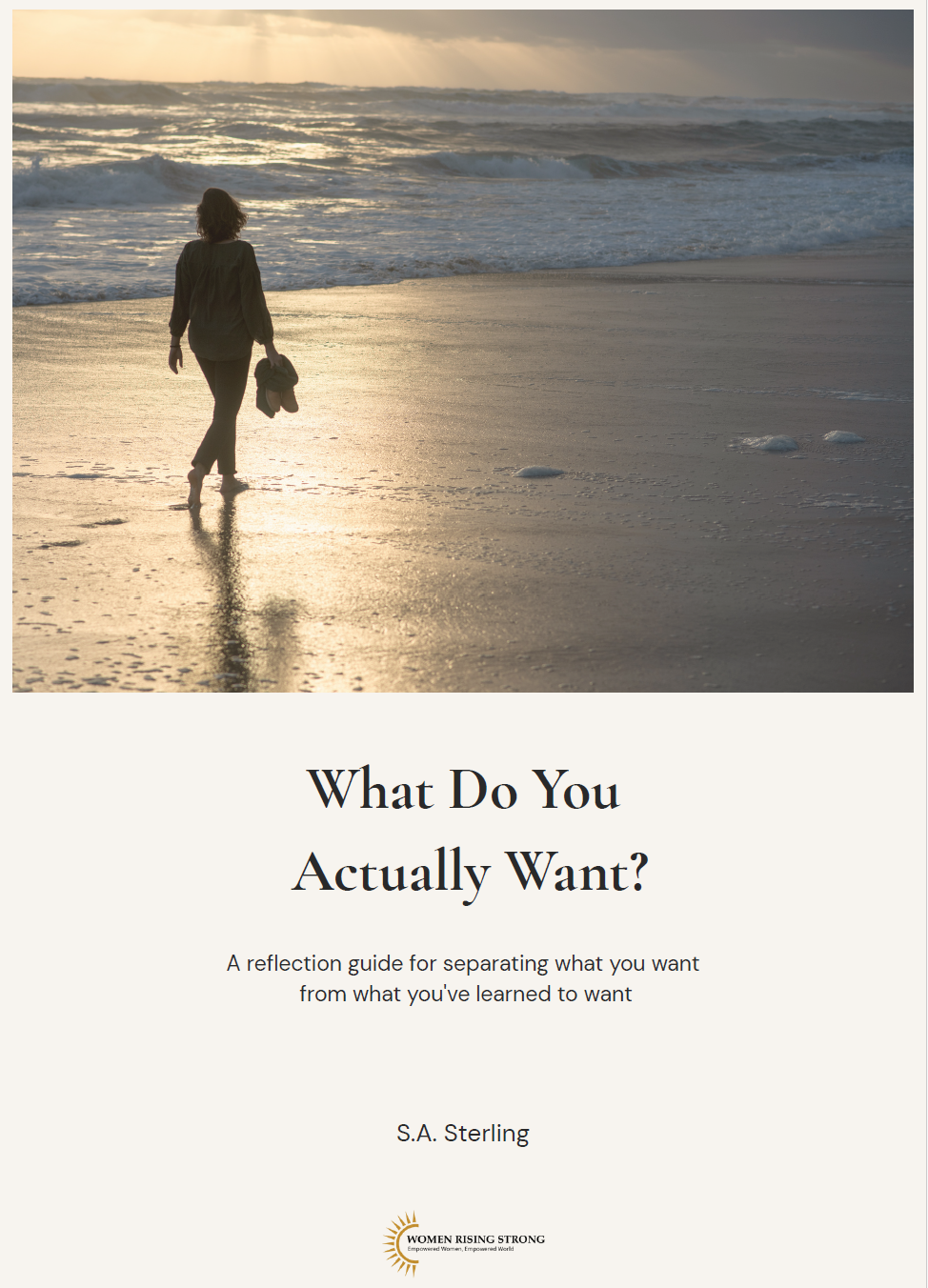
What Do You Actually Want?
Sometimes we know exactly what we're supposed to want.
A certain kind of success. A certain kind of life. Work that looks meaningful, relationships that look right, goals that once made sense. And sometimes we've carried those ideas for so long that it's difficult to tell where expectation ends and our own wanting begins.
What Do You Actually Want? is a short reflection guide designed to help you slow down and listen more closely.
You'll look at what you want more of, what you've outgrown, the voices behind your shoulds, the things you miss, and the ordinary life you would actually want to live—not just the version that looks good from the outside.
There are no five-year plans here, and no pressure to reinvent your life.
Just a few pages of questions that may help you recognize what still feels like yours.
Download the free guide and give yourself some room to answer a question we don't always ask often enough: What do I actually want?
TRY THIS
Small things worth trying, just because
Not everything has to become a habit.
You don't need to do these every morning, track them for thirty days, or turn them into another thing you're supposed to be good at.
Pick one that catches your attention. Try it once.
See what happens.
Leave one thing undone.
Choose something that doesn't really need to happen today—and don't do it.
Notice: Does anything actually happen? Or is the hardest part simply allowing yourself to leave it?
Take a walk without filling the silence.
No podcast. No phone call. No music in your ears.
Just walk.
Notice: Where does your mind go when nobody else is talking to it?
Say “Let me think about it.”
The next time someone asks you for something and your automatic answer is yes, don't answer yet.
Notice: Does your answer change when you give yourself a little time?
Do something you're not good at.
Play an instrument. Draw something. Dance. Try a recipe you've never made. Speak the language you're still learning.
Don't try to improve.
Just do it.
Notice: Can you enjoy something without needing to be good at it?
Sit somewhere else.
Drink your coffee in a different chair. Eat lunch outside. Sit on the floor. Take your book somewhere you've never read it before.
Nothing profound has to happen.
Notice: What do you see from there that you don't usually see?
Ask one more question.
When someone tells you something today, resist the urge to immediately tell them about the similar thing that happened to you.
Ask them one more question instead.
Notice: What do you learn when you stay with someone else's story a little longer?
Don't explain your no.
Say:
“I can't this time.”
And stop there.
No invented appointment. No long explanation. No case for the defense.
Notice: How much of the discomfort comes from saying no—and how much comes from not explaining it?
Call someone.
Not because it's their birthday.
Not because you need something.
Not because something happened.
Just because you thought of them.
Notice: How different does a voice feel from a message on a screen?
Put your phone somewhere inconvenient.
Not forever. An hour will do.
Leave it in another room while you cook, read, garden, watch a film, have dinner, or sit outside.
Notice: How often do you reach for it without deciding to?
Ask for one specific thing.
Not “I could use more help around here.”
Try:
“Could you make dinner tonight?”
“Can you call and make that appointment?”
“Could you take care of this from beginning to end?”
Notice: Is asking for something concrete easier or harder than hoping someone notices?
Wear the thing.
The dress you keep saving.
The earrings that seem like too much for an ordinary Tuesday.
The shoes you bought and hardly wear.
The good perfume.
Today is already an occasion.
Notice: What exactly were you saving it for?
Do something slowly on purpose.
Peel an orange. Make coffee. Water the plants. Chop vegetables. Brush your dog. Fold a towel.
Don't multitask.
Don't make it mindfulness.
Just don't hurry.
Notice: What does rushing normally add to the experience?
Change one tiny thing you always do the same way.
Take another road home. Order something different. Move a chair. Listen to music you've never heard. Walk in the opposite direction.
Nothing life-changing.
Notice: How much of your day happens because you've chosen it—and how much simply because that's how you always do it?
Let somebody do it differently.
If you've asked someone else to take care of something, resist correcting the way they do it simply because it isn't your way.
Unless it genuinely matters, leave it alone.
Notice: Do you want the help—or do you want the help done exactly as you would do it?
Do something that has no useful outcome.
Read ten pages.
Play the piano.
Look through old photographs.
Make something nobody will see.
Sit in the sun.
Listen to an entire album.
Do something that produces absolutely nothing.
Notice: How quickly does the part of you that measures usefulness show up?
That's enough.
You don't need to try all of these.
You don't even need to finish the one you chose.
The point isn't to become better at anything.
It's just to interrupt the usual way of doing things long enough to notice something you might otherwise have missed.
Try one. Then get on with your day.
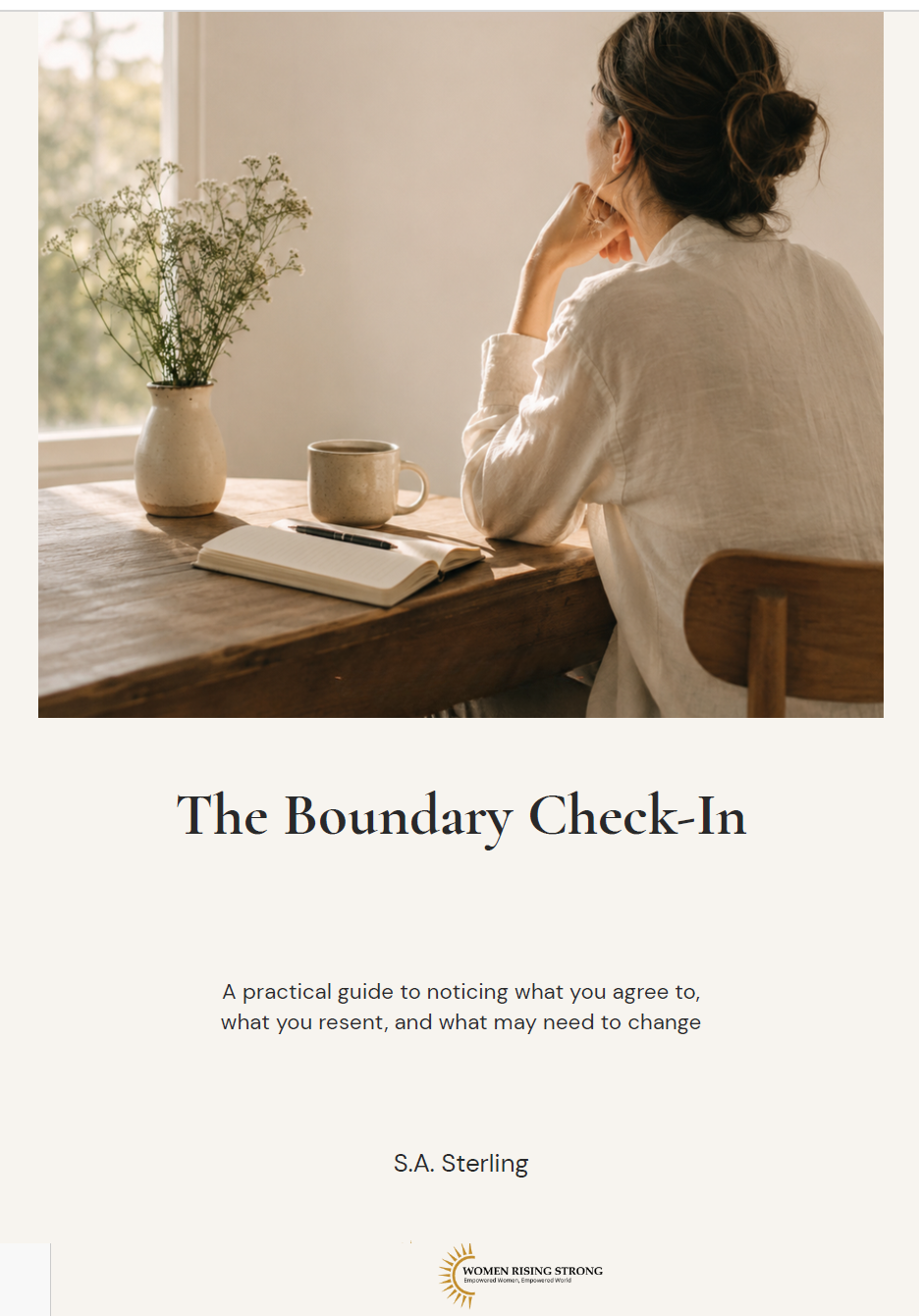
The Boundary Check-In
Boundaries can sound simple when we talk about them in theory.
Say no. Ask for what you need. Stop taking responsibility for everyone else.
Real life is usually more complicated.
Sometimes we say yes because we genuinely want to help. Sometimes we say yes and resent it later. Sometimes we expect someone to know what we need without ever saying it. And sometimes we care so much about another person’s disappointment that we start changing our own answer to make it go away.
The Boundary Check-In is a practical reflection guide to help you look more closely at those moments.
You’ll explore where your yes comes from, what resentment might be telling you, the difference between a request and a boundary, what is yours to carry and what isn’t entirely yours, and how to ask more clearly for what you need.
There are no rules here about how often you should say yes or no.
Just some space to notice where something isn’t working anymore—and decide what, if anything, you want to do differently.
Download the free guide and take a closer look at the places where your yes and your no may need a little more honesty.