

Women Entrepreneurs
What makes someone decide to build something of her own?
Sometimes it begins with an idea.
Sometimes with ambition.
And sometimes with the quiet conviction that something everyone else has learned to accept could simply be done better.
The women featured here have built businesses in very different ways. What interests me isn't only what they created or how successful it became, but what happened before that: the problem they noticed, the assumption they questioned, the risk they were willing to take.
Entrepreneurship is often talked about in terms of growth, money and success.
But before any of those things, there is usually a decision:
This doesn't have to stay the way it is.
Anne Boden
What If the Bank Didn't Have to Be a Bank?
Image Source: thisismoney.co.ukAnne Boden knew banking from the inside.
She had spent around thirty years working in financial services, holding senior positions at established institutions in Britain and elsewhere.
She knew how banks worked.
Perhaps more importantly, she knew how much of the way they worked had simply come to be accepted.
Then she decided to build one differently.
In 2014, Boden founded Starling Bank with the idea that banking could be designed around the technology people were already carrying in their pockets. Instead of taking a traditional bank and adding an app to it, she wanted to build the bank itself around digital technology.
That distinction mattered.
There would be no network of branches to reproduce. Customers could see transactions as they happened, understand where their money was going and manage much of their financial life from their phones.
None of this sounds particularly radical now.
That may be one of the best measures of what changed.
Features that once helped distinguish digital banks—instant spending notifications, card controls, budgeting tools and banking from a phone—have become increasingly familiar parts of everyday banking.
But building a bank is not the same as building an app.
It meant convincing regulators, investors, employees and eventually customers that a new bank could be trusted with something people are understandably reluctant to experiment with:
their money.
Starling received its UK banking licence in 2016 and launched its first personal current account the following year. It later expanded into business banking and developed technology that could be used by other banks.
Boden eventually stepped away from running the company she had founded.
But perhaps the most interesting part of her story happened much earlier, before there was a bank at all.
After decades inside an established industry, she was willing to look at something she understood extremely well and ask whether understanding how it worked meant accepting how it worked.
It didn't.
There is a particular kind of courage in entering an unfamiliar world.
There is another kind in knowing a world intimately—and deciding it needs to change.
Leila Janah
The Work Was There. The Opportunity Wasn't.
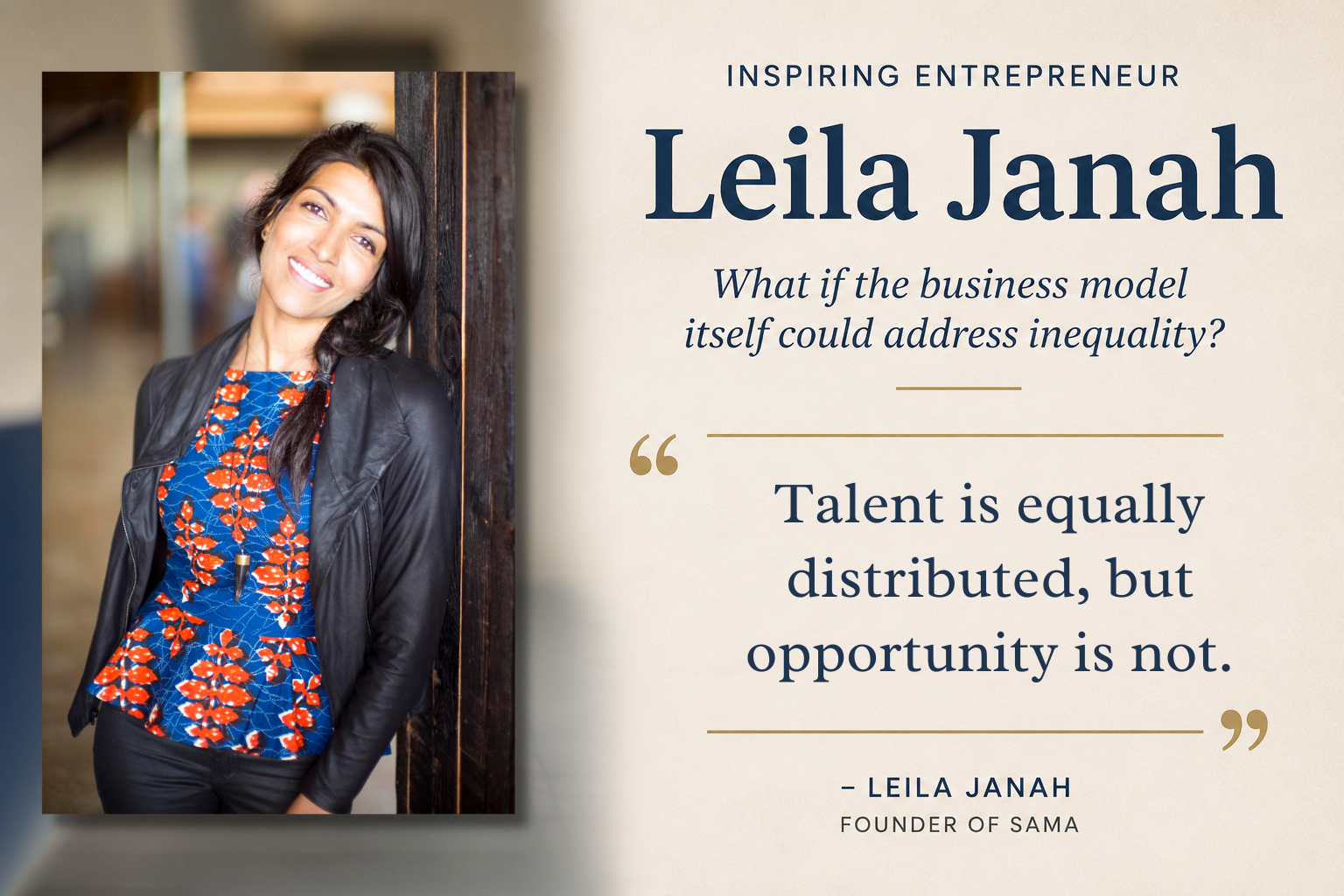
Leila Janah became interested in poverty because she had spent enough time around it to question some of the assumptions people made about it.
While working in India, she met people who were educated, capable and eager to work, but whose opportunities were limited largely by where they had been born.
One encounter stayed with her.
At a call centre in Mumbai, Janah met a young man who travelled each day from Dharavi, one of the city's poorest and most densely populated areas, to work at a computer.
It made her wonder:
Why couldn't the work go to people like him?
At the time, companies around the world were already outsourcing enormous amounts of digital work. Janah began to imagine using that same system differently—not simply to find cheaper labour, but to bring paid work to people who had been largely excluded from the global economy.
In 2008, she founded Samasource, later known as Sama.
The idea became known as impact sourcing. Sama trained and employed people in low-income communities to carry out digital work for international companies. Over time, that work came to include data annotation for artificial intelligence and machine-learning systems.
Janah's argument was not that employment could solve every cause of poverty.
It was simpler than that.
People living in poverty did not necessarily lack intelligence, ambition or ability.
They often lacked access.
That distinction shaped much of her work.
She was also uncomfortable with the idea that helping people always meant giving something to them. A job created a different relationship. Someone was not receiving charity. She was being paid because her work had value.
Janah called this idea “Give Work.”
She later founded Samaschool, which focused on helping people gain skills for digital work, and LXMI, a skincare company designed around sourcing ingredients from women in low-income communities.
Different businesses. The same question underneath them:
Could the way we do business itself create opportunity?
Leila Janah died from epithelioid sarcoma in 2020. She was thirty-seven.
Her death makes it tempting to describe her life in terms of how much she accomplished in so little time.
But perhaps the more interesting measure is what continued after her.
Sama continued. So did the larger conversation she helped advance about impact sourcing, dignified work and the possibility that a company could consider social impact not as something added after profits were made, but as part of the way the business worked in the first place.
Janah did not believe that talent belonged only to the places where opportunity was easiest to find.
She believed it was everywhere.
Opportunity wasn't.
And perhaps that was the problem worth building something to change.
Sarah Blakely
What Do You Do With All the Noes?
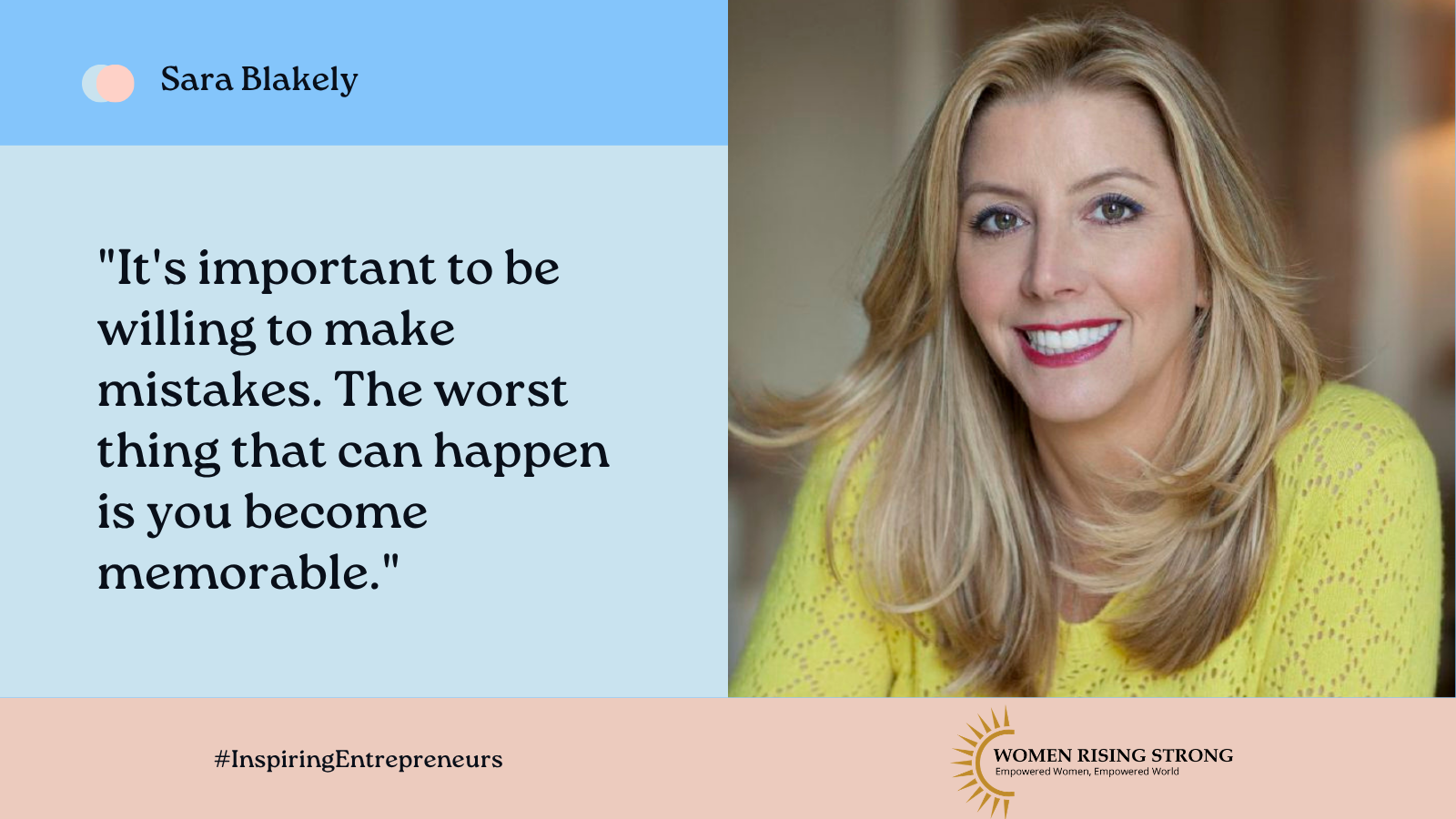
Sara Blakely spent years selling fax machines door to door.
That meant hearing no a lot.
People didn't want the machine. They didn't want the appointment. Sometimes they didn't even want to open the door.
It wasn't glamorous work. But without knowing it, Blakely was learning something she would need later:
how to keep going after someone had dismissed her.
The idea for Spanx came from an ordinary frustration. Blakely wanted the smoothing effect of control-top pantyhose under a pair of white trousers, but she didn't want the feet showing in open-toed shoes.
So she cut them off.
The homemade solution wasn't perfect—the pantyhose rolled up—but the problem stayed in her mind.
What if someone actually made the product she was looking for?
Blakely knew almost nothing about the industry she was about to enter. She had never worked in fashion, had never taken a business class and had no connections in manufacturing.
She did have $5,000 in savings.
And an idea she couldn't quite let go of.
She began calling hosiery manufacturers.
They said no.
She travelled to North Carolina, where much of the American hosiery industry was based, and tried again.
More noes.
One manufacturer initially turned her down too. Then he went home and told his daughters about the woman who wanted to make footless shapewear. They thought the idea made sense.
He called Blakely back.
That small detail says something important about her story.
The idea hadn't suddenly become better.
Someone had finally been willing to see what she saw.
Blakely did much of the early work herself. She researched patents, wrote much of her own patent application and developed the product while still working her day job. In 2000, Spanx launched.
Then came another door.
This time it belonged to Neiman Marcus.
During her meeting with a buyer, Blakely did something wonderfully uncomplicated: she took the woman into the bathroom and showed her what she looked like in white trousers before and after putting on Spanx.
The buyer understood.
Neiman Marcus became the first retailer to carry the product. Later that year, Oprah Winfrey chose Spanx as one of her “Favorite Things,” giving the young company enormous exposure.
What followed is the part usually told about Sara Blakely.
Spanx grew.
For more than two decades, Blakely built the company without outside investment. In 2021, she sold a majority stake to Blackstone in a deal that valued Spanx at $1.2 billion, while retaining a significant ownership stake.
Those numbers are extraordinary.
But they can also make the beginning look inevitable.
It wasn't.
There was a woman selling fax machines.
There was a pair of scissors.
There were $5,000 in savings.
There was a product that didn't exist yet.
And there were a great many people who didn't think it needed to.
Perhaps that is the part of entrepreneurship we lose when we tell the story backwards.
Once something succeeds, we can see all the reasons it worked.
The person beginning has none of that certainty.
She has only the idea—and the decision about what to do with the next no.
Sometimes no means the idea isn't right.
And sometimes it only means you haven't reached the right door yet.
Jessica Alba
When the Thing You Need Doesn't Exist
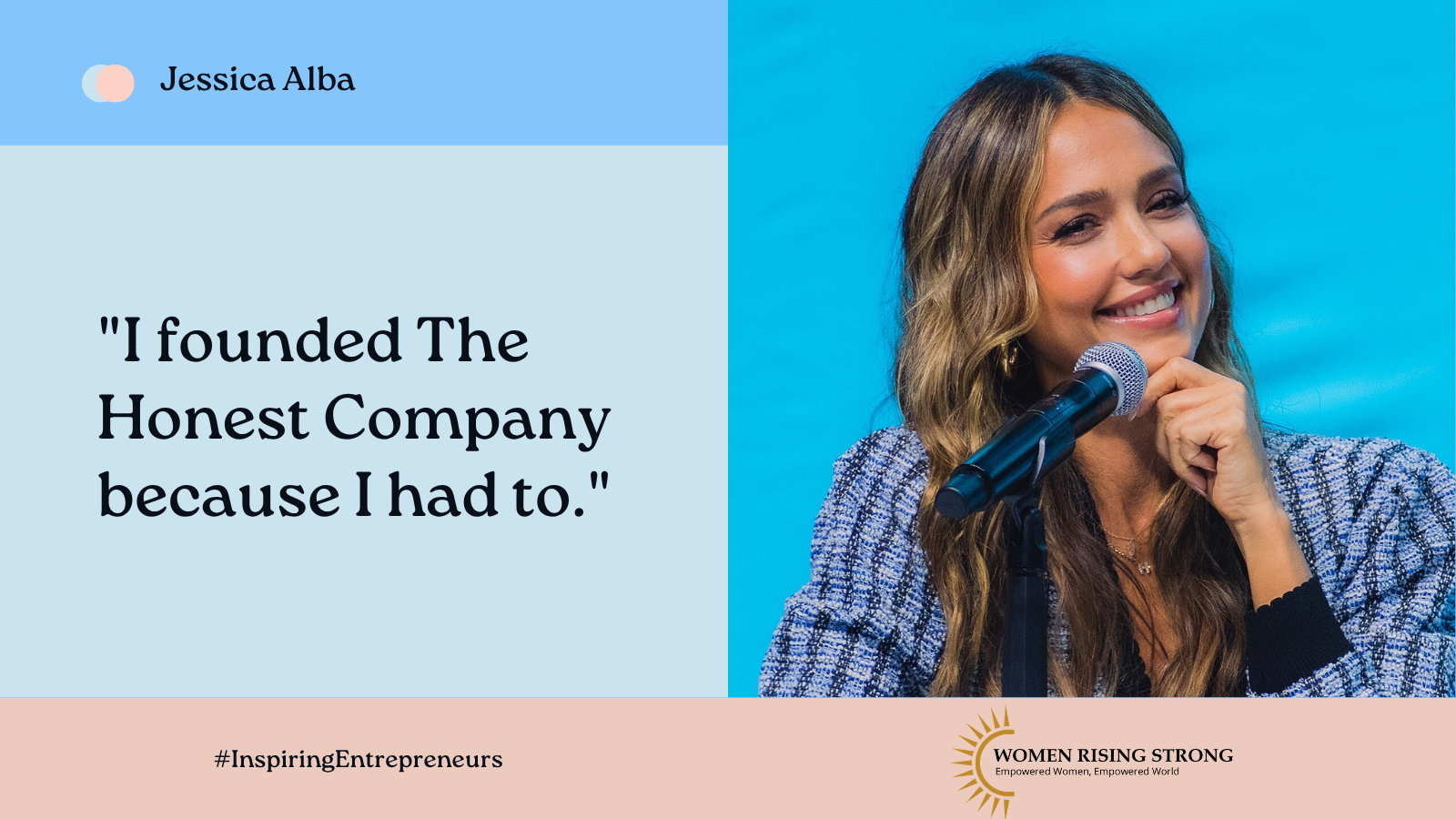
Jessica Alba already had a career.
She had been acting since she was a teenager and had become internationally known through film and television. Starting a consumer-products company wasn't an obvious next step.
She hadn't planned on becoming an entrepreneur at all.
Then she became pregnant with her first daughter.
Alba had grown up with severe allergies and asthma and had spent considerable time in hospitals as a child. During her pregnancy, she washed some baby clothes with a detergent marketed for babies and broke out in a rash.
It frightened her.
She began looking more closely at the ingredients in the household and personal-care products she was buying. She wanted alternatives she felt comfortable using around her baby, but she also wanted them to work, look good and be affordable.
She couldn't find enough products that satisfied her.
So eventually she began asking a different question:
What if I created them?
That sounds simple when you already know what happened next.
It wasn't.
Alba knew the entertainment industry. She did not know how to formulate household products, build supply chains, navigate regulation or create a consumer-goods company.
And having a famous name didn't automatically make people believe she could.
For several years, she worked on the idea, researched the market and tried to persuade potential partners that there was room for a company built around the standards she wanted.
Her early pitch didn't work.
Alba herself has acknowledged that the original idea was too broad and difficult to explain. People weren't necessarily seeing what she saw.
So she kept refining it.
The Honest Company eventually launched in 2012 with a small range of baby, household and personal-care products.
The idea was not simply to sell another detergent or another diaper.
Alba wanted to build a brand around something she had struggled with herself as a consumer:
trust.
Could someone pick up an everyday product and understand what the company behind it was trying to do? Could products be designed around stricter ingredient standards while also being effective, attractive and accessible?
Those questions became the foundation of the business.
The company grew far beyond its original range and eventually went public on Nasdaq in 2021.
But the size of the company isn't the part of Alba's story that interests me most.
It's the beginning.
She went looking for something.
She couldn't find quite what she wanted.
And instead of assuming that meant she was asking for too much, she began wondering whether there might be other people looking for it too.
There is something very entrepreneurial in that moment.
Not every frustration needs to become a business.
Not every missing product represents an opportunity.
But sometimes the things that irritate us, inconvenience us or make us wonder why doesn't somebody make this differently? are telling us something.
Alba noticed a gap first as a mother and a consumer.
Only later did she learn how to become the person who might fill it.
Sometimes an idea begins not with knowing what you want to build.
It begins with knowing what you wish you could find.